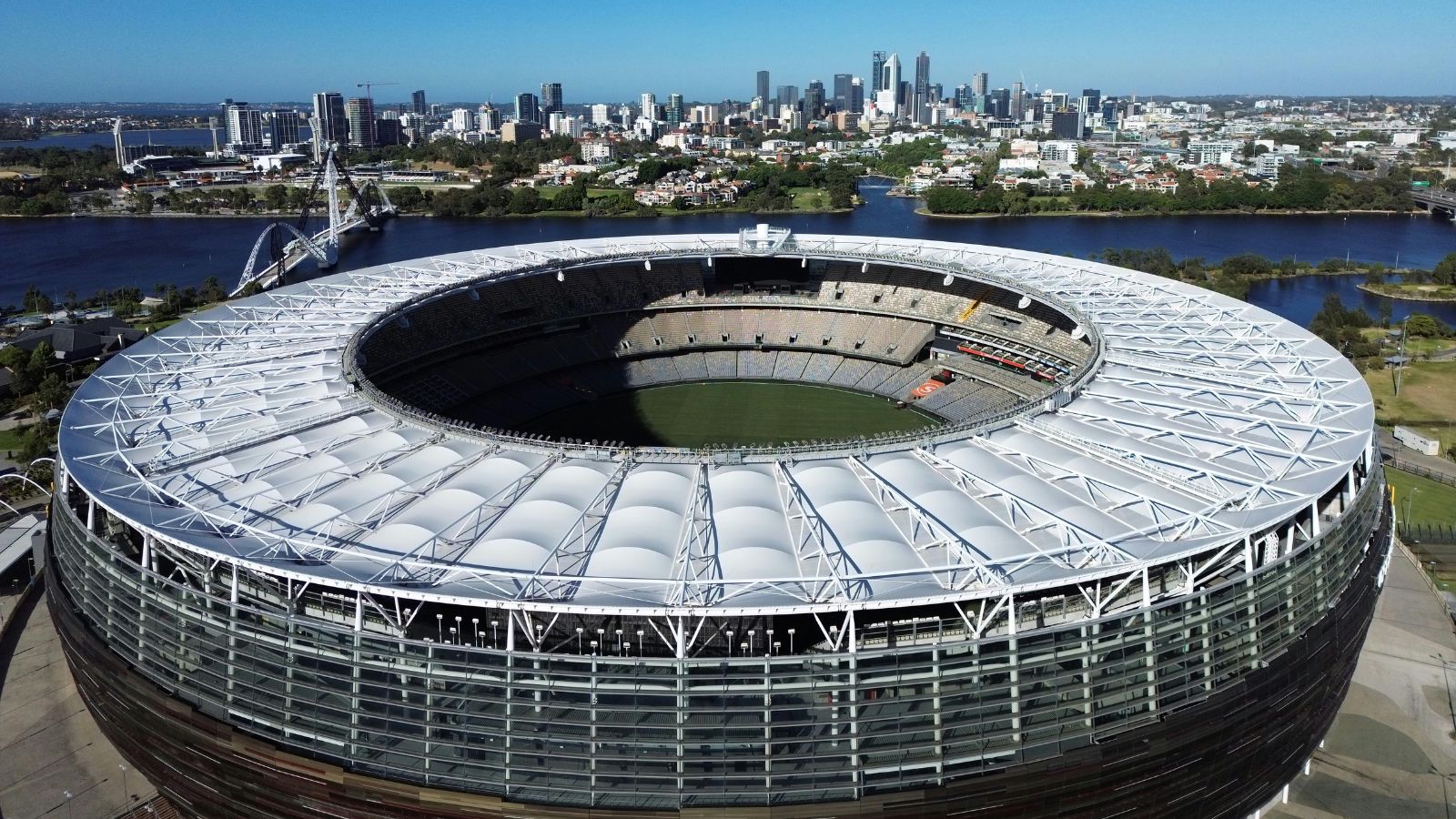
Stadiums, concert venues, and large arenas use thousands of drink cups within just a few hours. In a single-use system, this creates a huge amount of waste almost instantly, often leaving stands, corridors, and food areas covered with discarded plastic cups after an event. Reusable cup systems offer a more sustainable alternative. Instead of treating cups as disposable waste, they keep them in circulation across multiple events. For large venues, the impact can be significant.
By switching to reusable cups, stadiums can reduce plastic waste, lower their environmental footprint, and move toward a more circular way of managing events.
Why reusable cups matter
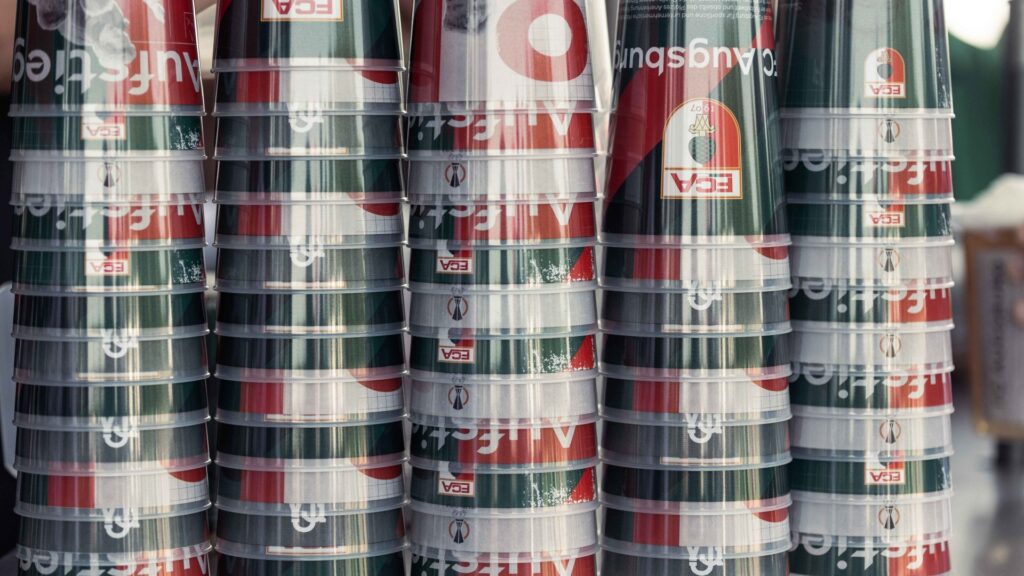
The idea is simple: cups are used by fans, collected after the event, professionally washed, and returned for future use. This helps “close the loop” and reduces the need for constant single-use production. However, the system is only truly effective when returns are easy for fans, collection is well organized, and the process does not create extra pressure on concession stands or event staff. Reuse cycles and responsible end-of-life recycling remain important, but the overall success depends heavily on a return system that is convenient, efficient, and operationally smooth. When managed well, reusable cups become a practical and visible step toward cleaner, more responsible stadium events.
Benefits
Environmental impact
Reusable cup systems can significantly reduce the environmental footprint of stadium events. Life-cycle assessments show that reusable polypropylene and stainless steel cups perform much better than single-use alternatives when they are reused enough times. For example, one PP cup used 300 times can create up to 60 times less carbon pollution and 68 times less waste than 300 single-use PET cups. At the AVIVA Stadium in Dublin, reusable cups helped save more than two tonnes of CO₂-equivalent emissions during a single rugby match.
Operational and economic gains
Reusable systems can also make stadium operations more efficient. Fewer discarded cups mean lower cleanup pressure, cleaner stands, and potentially reduced waste management costs.
They can also create extra revenue through unclaimed deposits, sponsorships, branded cups, or limited-edition designs. In this way, reusable cups are not only a sustainability measure but also a practical commercial opportunity.
Better recycling quality
Single-use plastic cups are often wet and dirty, which can contaminate other recyclable materials. Removing them from the waste stream helps improve the quality of dry mixed recycling. This means that reusable cup systems can support better overall recycling performance across the stadium, not just reduce cup waste.
Safety and fan experience
Reusable cups are strong, shatterproof, and safer for crowded stadium environments. They also feel more premium than thin disposable cups, which can improve the fan experience. Reusable cups can also improve the drinking experience, as their sturdier material helps beverages stay colder or warmer for longer than thin single-use cups, making drinks taste better throughout the event. When the system is clear and convenient, fans usually respond positively. A user evaluation carried out during a two-day festival in Copenhagen shows that, 98% of participants supported replacing single-use cups with reusable alternatives.
Branding and additional revenue
Reusable cups and multi-drink carriers also offer strong branding opportunities. Stadiums can add team colors, logos, sponsor messages, or event-specific designs. Reusable carriers can help fans carry more drinks at once, reduce cardboard waste, and shorten queues during busy periods such as half-time.
Major challenges and issues
Space and infrastructure constraints
Reusable systems require storage space, collection points, washing, drying, sorting, and redistribution. This can be difficult for stadiums that were originally designed around disposable packaging. Some venues have rejected reusable systems because they lacked the space or resources to manage the logistics properly.
End-of-life disposal
Reusable cups still need a responsible end-of-life solution. Many are made from virgin polypropylene, and if they are not collected and recycled properly, they may be downcycled, incinerated, or sent to landfill. To make the system truly circular, old cups should ideally be recycled back into high-quality material for new cups.
Hygiene and logistics
Cups must be professionally washed, fully dried, and stored in clean conditions. If they are packed away while still damp, they can develop unpleasant odors or hygiene issues. This means stadiums need either reliable on-site washing facilities or a strong external partner to manage cleaning and logistics between events.
The problem with single-use alternatives
Switching from plastic to another single-use material is not always the best solution. For example, single-use aluminum cups may seem more sustainable, but research shows they can create more emissions than plastic under typical recycling conditions. The real improvement usually comes from reducing single-use products altogether and building a well-managed reusable system.
Lack of automation and queue management
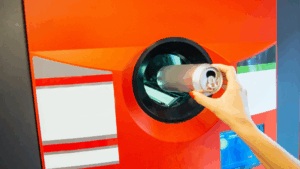
One of the biggest challenges for reusable cup systems is the lack of automation in the return and refund process. If fans need to return cups manually at concession stands or wait for staff to check, count, and process deposits, the system can quickly create long queues, especially during half-time or after the event. This puts extra pressure on concession staff, slows down service, and can frustrate visitors who simply want to buy a drink or leave the venue smoothly. Without automated return points or a well-designed collection system, reusable cups can become an operational burden instead of an efficiency improvement.
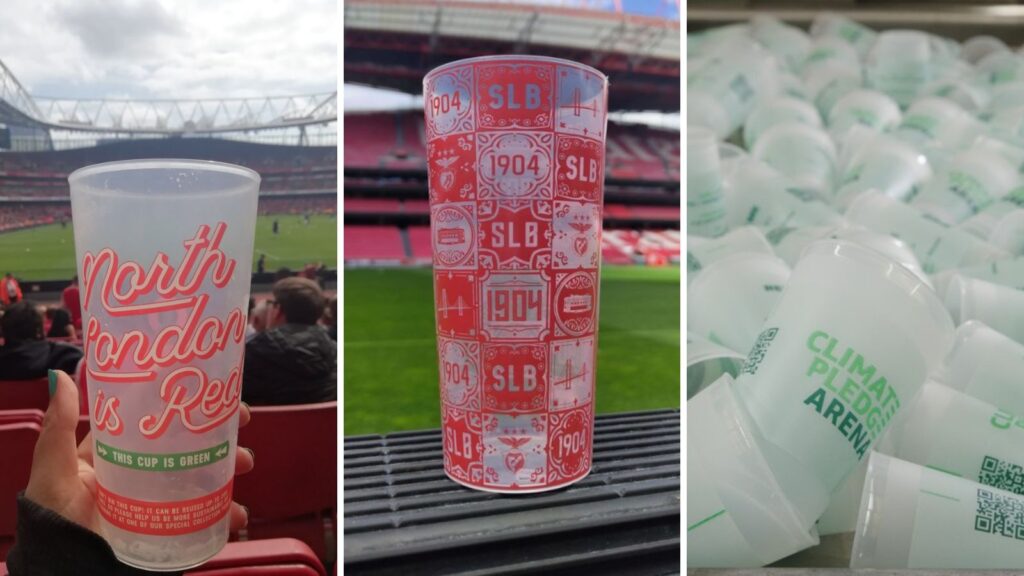
Global adoption of reusable cup systems
The following table highlights 50 well-known sports stadiums and arenas around the world that have introduced reusable cup systems. Rather than serving as a complete global database, it provides a selected overview of famous venues where reusable cups are already part of event operations. The list includes stadiums and arenas across Europe, North America, Asia, and Australia, showing that reusable systems are being adopted in different markets, venue types, and sports environments.
This table lists venues operating reusable cup systems, meaning cups that are collected, washed and reused for multiple events. It does not classify recyclable single-use aluminium cups as reusable systems.
For each venue, the table includes basic information such as location, capacity, associated clubs or teams, and a source where readers can find more details. Together, these examples show that reusable cup systems are no longer limited to small pilot projects, but are already being used by major clubs, national stadiums, and large entertainment arenas worldwide.
| Stadium/Arena | Clubs/Teams | Country | City | Capacity |
|---|---|---|---|---|
| Allianz Arena | FC Bayern München | Germany | Munich | 75000 |
| Aviva Stadium | Ireland Rugby / FAI | Ireland | Dublin | 51700 |
| Emirates Stadium | Arsenal FC | UK | London | 60704 |
| Tottenham Hotspur Stadium | Tottenham Hotspur FC | UK | London | 62850 |
| Etihad Stadium | Manchester City FC | UK | Manchester | 55097 |
| Stamford Bridge | Chelsea FC | UK | London | 41312 |
| London Stadium | West Ham United FC | UK | London | 60000 |
| Twickenham Stadium | England Rugby | UK | London | 80000 |
| Lord's Cricket Ground | Marylebone Cricket Club | UK | London | 30000 |
| The Oval | Surrey Cricket Club | UK | London | 27500 |
| Edgbaston Stadium | Warwickshire CCC / England Cricket | UK | Birmingham | 25000 |
| Pride Park Stadium | Derby County FC | UK | Derby | 33500 |
| Murrayfield Stadium | Scotland Rugby | UK | Edinburgh | 67144 |
| OVO Hydro | Various concerts/events | UK | Glasgow | 13000 |
| Stade de France | France National Teams | France | Paris | 81338 |
| Estádio da Luz | SL Benfica | Portugal | Lisbon | 68100 |
| Bosuilstadion | Royal Antwerp FC | Belgium | Antwerp | 16649 |
| Veltins-Arena | FC Schalke 04 | Germany | Gelsenkirchen | 62271 |
| Volksparkstadion | Hamburger SV | Germany | Hamburg | 57000 |
| MEWA Arena | Mainz 05 | Germany | Mainz | 33305 |
| WWK Arena | FC Augsburg | Germany | Augsburg | 30660 |
| Deutsche Bank Park | Eintracht Frankfurt | Germany | Frankfurt | 58000 |
| MHPArena | VfB Stuttgart | Germany | Stuttgart | 60058 |
| Uber Arena | Berlin sports & concerts | Germany | Berlin | 17000 |
| Intility Arena | Vålerenga FK | Norway | Oslo | 17300 |
| O2 Arena Prague | HC Sparta Praha | Czechia | Prague | 17000 |
| Crypto.com Arena | LA Kings / LA Clippers / LA Lakers | USA | Los Angeles | 20000 |
| Climate Pledge Arena | Seattle Kraken / Seattle Storm | USA | Seattle | 17100 |
| Levi's Stadium | San Francisco 49ers | USA | Santa Clara | 68500 |
| GEHA Field at Arrowhead Stadium | Kansas City Chiefs | USA | Kansas City | 76416 |
| Spectrum Center | Charlotte Hornets | USA | Charlotte | 19400 |
| Chase Field | Arizona Diamondbacks | USA | Phoenix | 48330 |
| Coors Field | Colorado Rockies | USA | Denver | 46897 |
| CPKC Stadium | Kansas City Current (NWSL) | USA | Kansas City | 11500 |
| BC Place | Vancouver Whitecaps / BC Lions | Canada | Vancouver | 54500 |
| Signal Iduna Park | Borussia Dortmund | Germany | Dortmund | 81365 |
| Anfield | Liverpool FC | UK | Liverpool | 61276 |
| Wembley Stadium | England National Football / FA Cup Finals / NFL London | UK | London | 90000 |
| Emirates Old Trafford | Lancashire Cricket Club / England Cricket | UK | Manchester | 26000 |
| BayArena | Bayer 04 Leverkusen | Germany | Leverkusen | 30210 |
| Borussia-Park | Borussia Mönchengladbach | Germany | Mönchengladbach | 54057 |
| Volkswagen Arena | VfL Wolfsburg | Germany | Wolfsburg | 30000 |
| Europa-Park Stadion | SC Freiburg | Germany | Freiburg | 34700 |
| Gtech Community Stadium | Brentford FC | UK | London | 17250 |
| Millerntor-Stadion | FC St. Pauli | Germany | Hamburg | 29546 |
| RheinEnergieSTADION | 1. FC Köln | Germany | Cologne | 50000 |
| Olympiastadion Berlin | Hertha BSC | Germany | Berlin | 74667 |
| wohninvest Weserstadion | SV Werder Bremen | Germany | Bremen | 42100 |
| PreZero Arena | TSG 1899 Hoffenheim | Germany | Sinsheim | 30150 |
| Stadion An der Alten Försterei | 1. FC Union Berlin | Germany | Berlin | 22012 |
Beyond the basic data shown in the table, several venues stand out for the scale and measurable impact of their reusable cup systems. Crypto.com Arena in Los Angeles appears to be one of the global leaders, operating 182 collection points across the venue and reporting more than 900,000 single-use cups saved during the 2025/2026 season. Allianz Arena in Munich also demonstrates large-scale implementation, with more than 160 collection and return points inside and outside the stadium, while Uber Arena in Berlin has eliminated almost 3 million single-use plastic cups since introducing its reusable system and reports an average return rate of around 90%.
The overview also shows that reusable cup systems can be adapted to very different operational models. OVO Hydro in Glasgow reports the elimination of up to 2 million single-use cups annually through its deposit-free OneUse programme, while Arsenal’s Emirates Stadium saved more than 500,000 single-use cups during the 2019/2020 season. Manchester City’s Etihad Stadium uses around 29,000 reusable cups per match, equal to approximately 800,000 cups per season, showing that reusable systems can deliver meaningful results in regular stadium operations, not only during pilot projects.
Smart DRS at the IIHF U18 World Championship
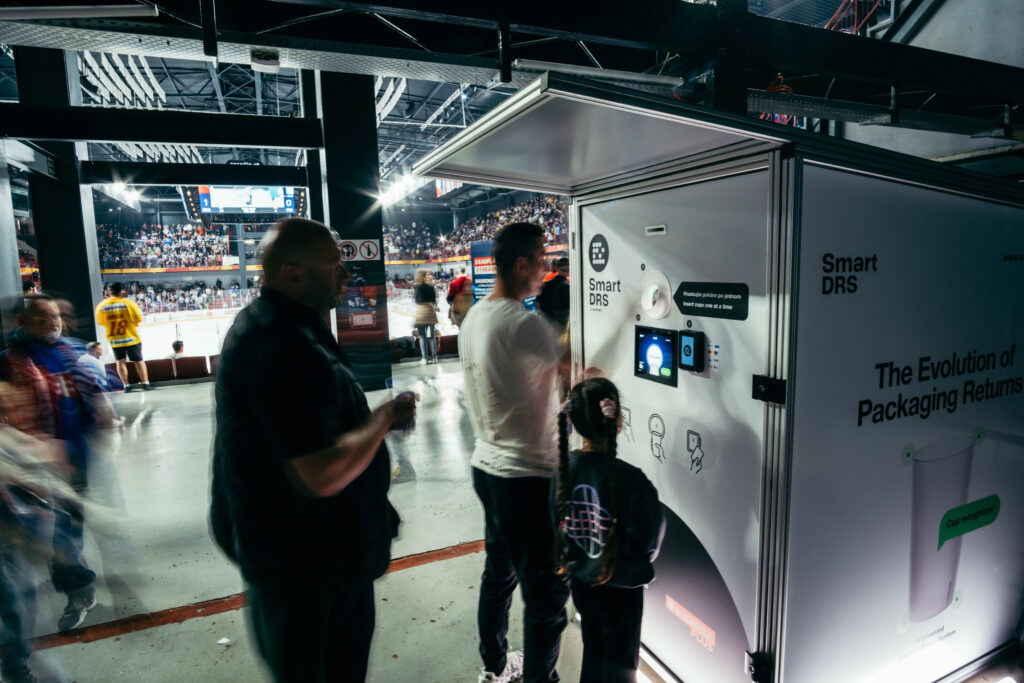
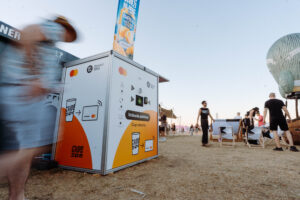
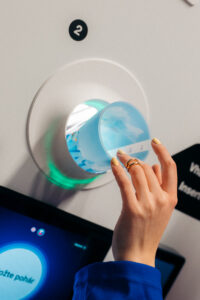
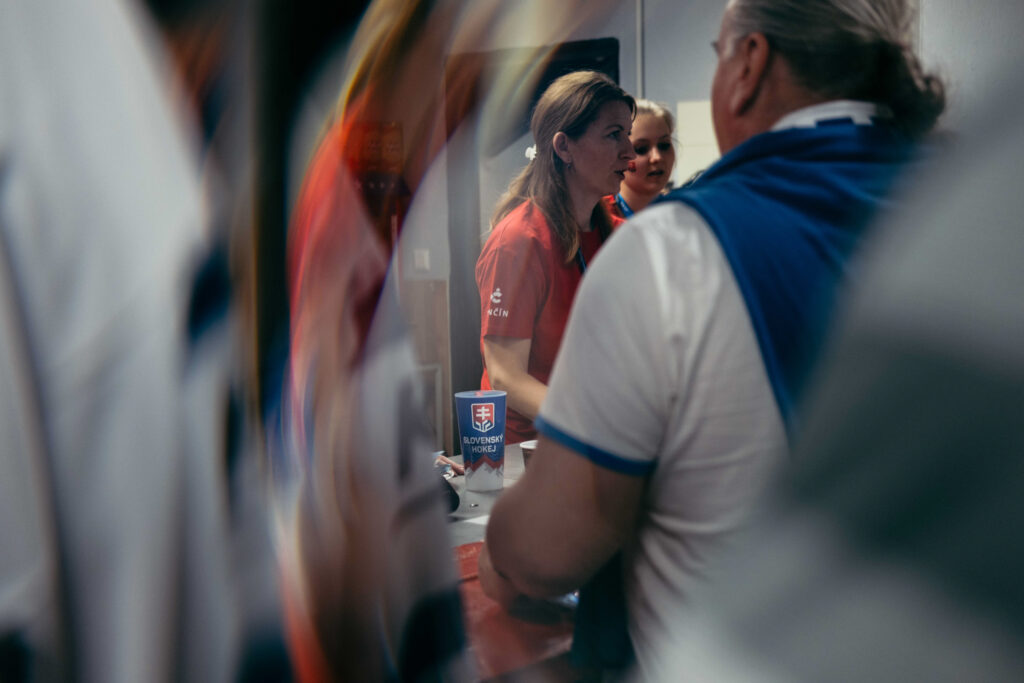
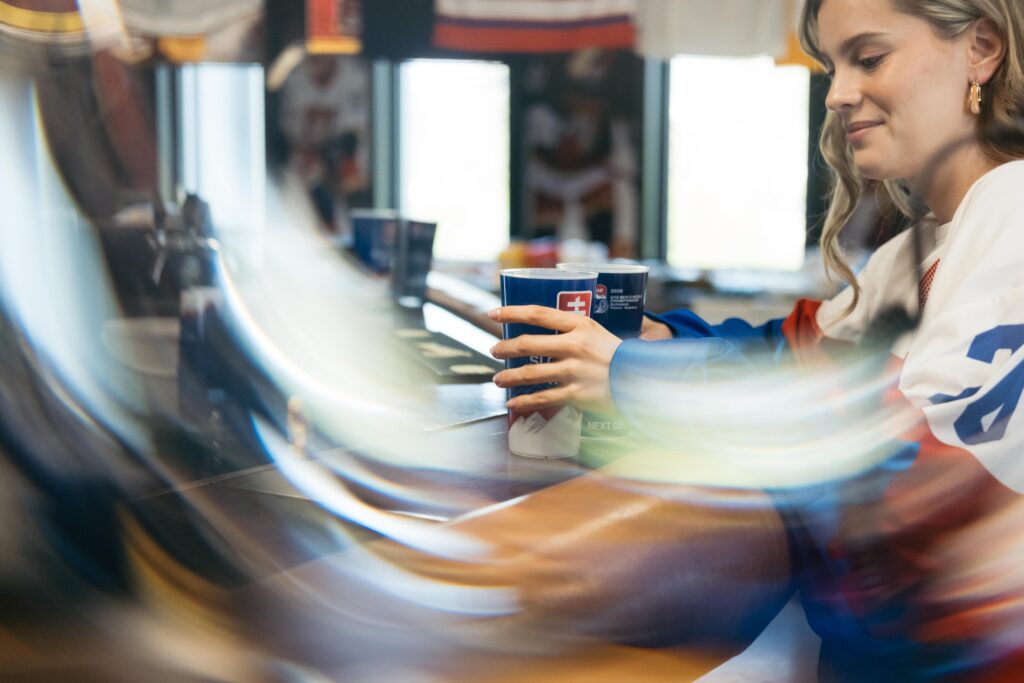
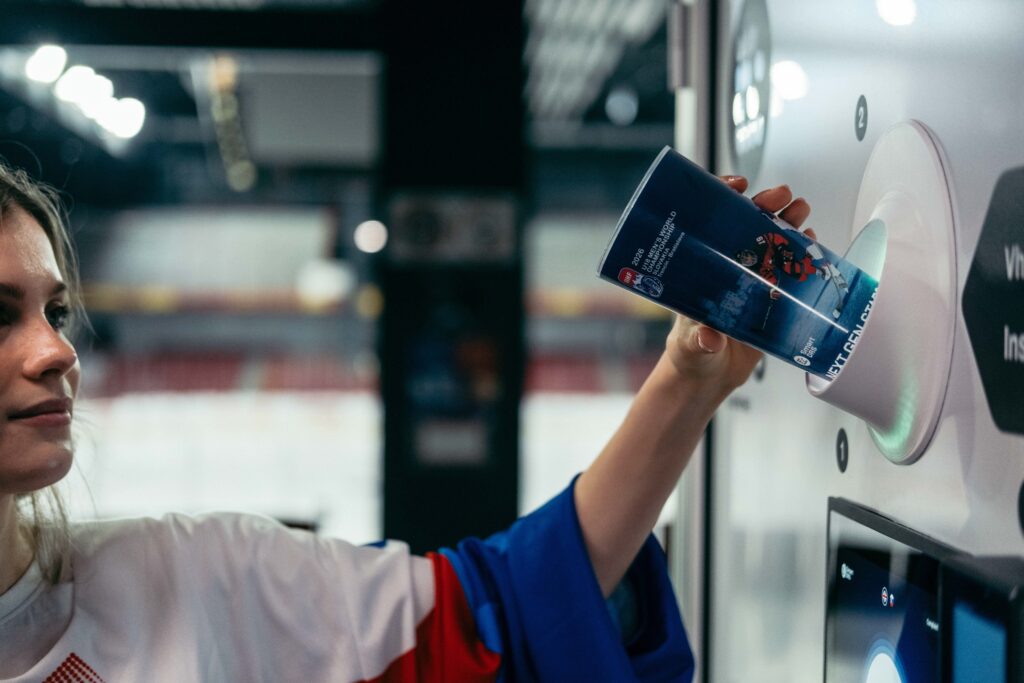
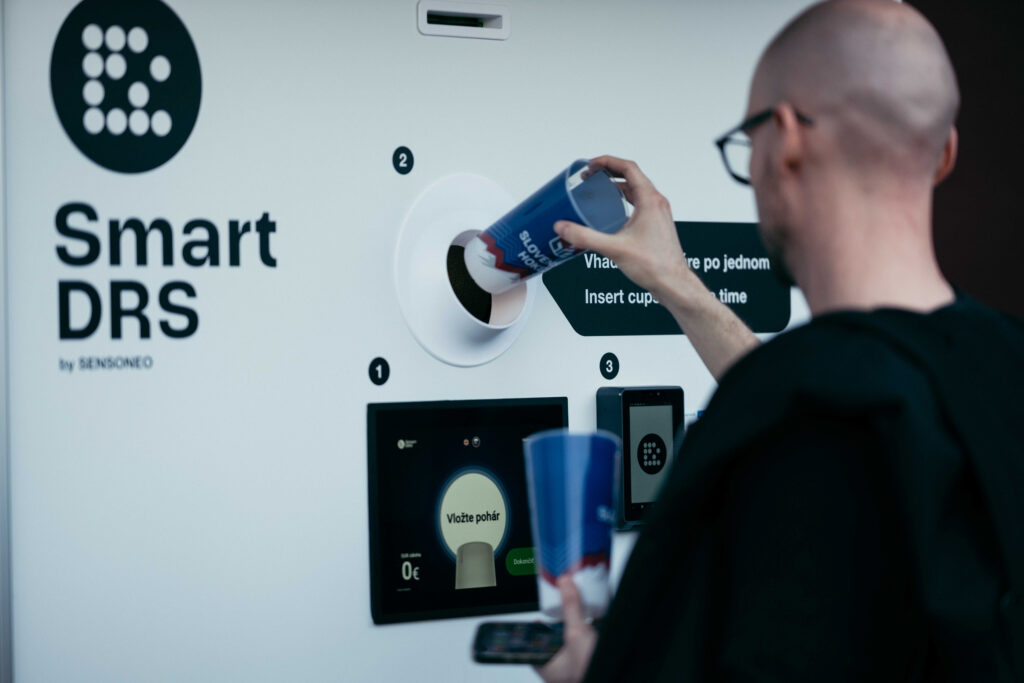
The success of reusable cup systems depends not only on the cups themselves, but also on how easily and efficiently visitors can return them. At the 2026 IIHF Ice Hockey U18 World Championship in Slovakia, Smart DRS demonstrated how automation can make reuse practical at a large sporting event. Across 29 games and 9 match days, more than 55,000 beverages were served in reusable cups, with over 44,300 cup returns processed through automated return stations. Fans received their deposits back directly to their payment cards within seconds, without registration or a mobile app.
The project also showed how automation can reduce pressure on venue operations. Instead of returning cups at concession stands, visitors used dedicated Smart DRS return points placed in high-traffic areas, allowing staff to focus on serving customers rather than handling cup returns or refunds. With 23,000 reusable cups in circulation, nearly 5,000 cups collected daily, and an estimated 70,000–80,000 single-use plastic cups avoided, the championship proved that automated return infrastructure can support both sustainability goals and a smoother fan experience at busy sports venues.
FAQ
What are reusable cups in stadiums?
Reusable cups in stadiums are durable drink cups designed to be collected, washed, and used again at future events. Instead of being thrown away after one use, they stay in circulation, helping venues reduce plastic waste, improve cleanliness, and support more sustainable event operations.
Why are reusable cups better than single-use cups?
Reusable cups can significantly reduce waste and carbon emissions when they are used multiple times. For stadiums and arenas, they also help keep stands and concession areas cleaner, reduce pressure on waste management, and create opportunities for branded or sponsored cup designs.
How do reusable cup systems work at large events?
A reusable cup system usually works through a return process. Visitors receive drinks in reusable cups, return them after use, and the cups are then collected, professionally washed, dried, stored, and redistributed for future events. Automated return stations can make the process faster and reduce queues.
What are the main challenges of reusable cups in stadiums?
The biggest challenges include storage space, cup collection, washing, drying, logistics, and refund management. If returns are handled manually at concession stands, reusable cups can create long queues. This is why automated return points and clear visitor instructions are important for a successful system.
Can reusable cups improve the fan experience?
Yes. Reusable cups are sturdier, safer, and more comfortable to use than thin disposable cups. When the return process is simple, fans benefit from cleaner venues, smoother service, and a more premium drinking experience. Smart return infrastructure can also help visitors get deposits back quickly without registration or a mobile app.