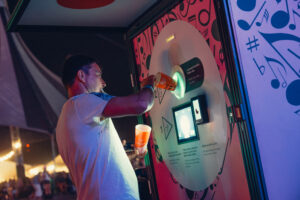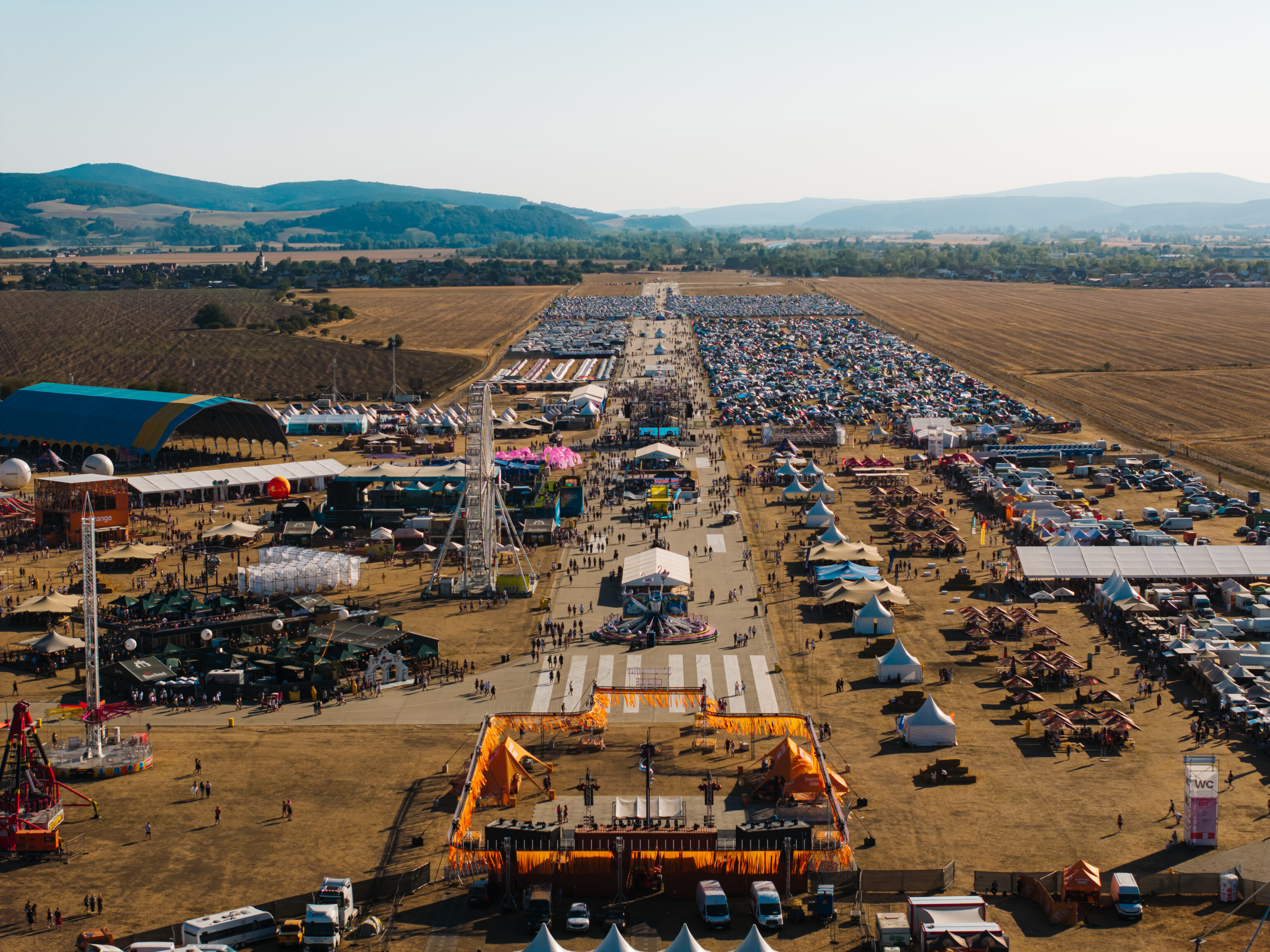
Planning cup returns at camping festivals requires infrastructure that remains accessible across daytime programming, late-night activity, campsite movement and final departure. At Grape Festival 2026, seven Smart DRS Dual stations supported 28,480 reusable cup returns across this continuous two-day visitor journey.
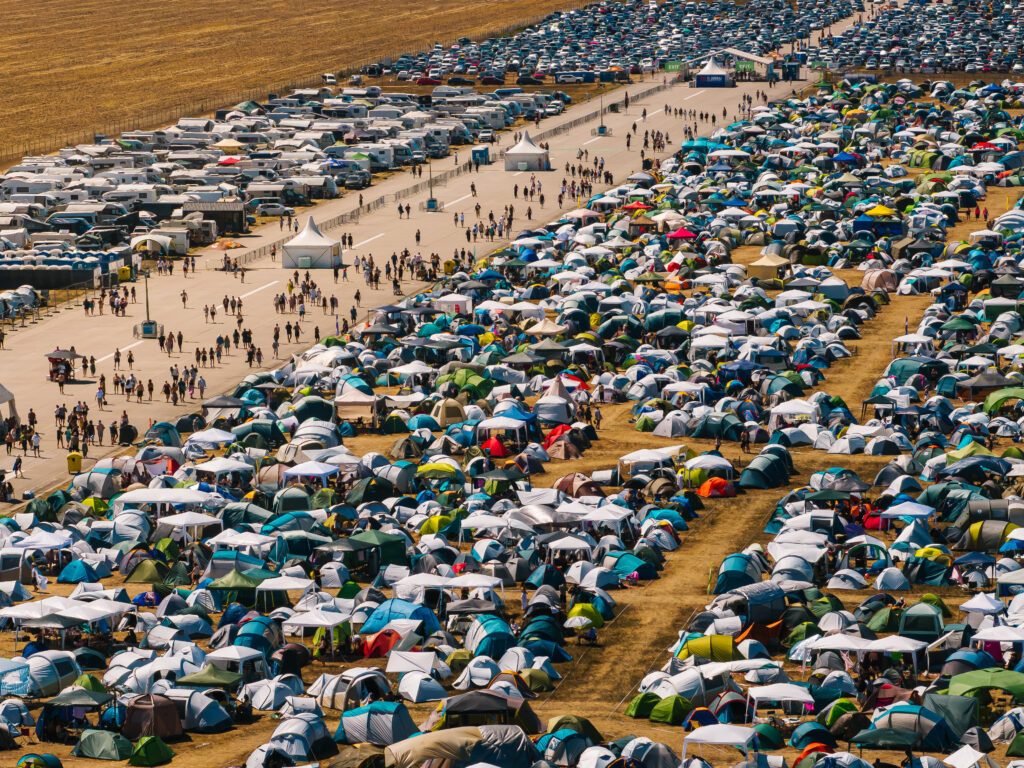
Grape Festival 2026: Event and Return-System Profile
| METRIC | CONFIRMED DETAIL |
| Event type | Two-day outdoor music festival with on-site camping |
| Event dates | 14–15 August 2026 |
| Location | Trenčín Airport, Trenčín, Slovakia |
| Published festival capacity | 30,000 visitors |
| Festival cycle | Daytime concerts, late-night programming, campsite movement and final departure |
| Cup deposit | €2 |
| Reusable cups returned | 28,480 |
| Average cups per return | 2.19 |
| Smart DRS deployment | 7 Dual stations / 14 return modules |
| Return experience | App-free; no account registration or QR-code scanning |
| Deposit return method | Full cup deposit returned directly to a payment card; payment functionality supported by Mastercard |

Key findings
- 28,480 eligible reusable cups were accepted through the Smart DRS deployment.
- Visitors returned 2.19 cups at a time on average, showing that the journey regularly supported multi-cup returns.
- Seven Dual stations provided 14 return modules across the festival environment rather than concentrating capacity at one manual return point.
- The same short, card-based process remained available across a changing day-to-night festival rhythm, without requiring an app or prior registration.


The challenge: reusable cup returns in a temporary festival city
Grape combines a large music programme with an on-site campsite and activity continuing late into the night. Visitors move between stages, refreshment areas, campsite routes and exits over an extended stay. This creates a different planning challenge from an event organised around one venue, one audience flow and one closing peak.
Return infrastructure therefore needs to fit the full visitor journey. It must be visible and easy to use during daytime service, remain relevant as the programme shifts into the evening and support visitors returning accumulated cups before their final departure.
For organisers, the central question is not only how many cups a system can process. It is whether visitors can access the same clear return process at different moments and locations while the temporary festival city changes around them.
The solution: a consistent, app-free return journey
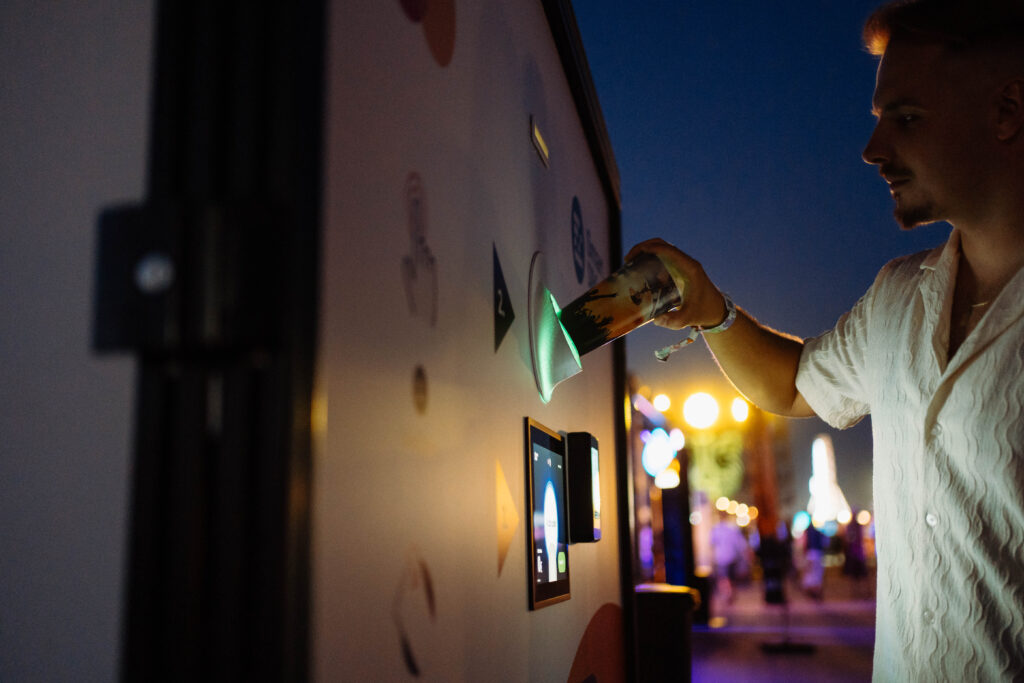
Smart DRS provided an automated return process designed to stay consistent even as visitor activity changed across the festival. Eligible cups were recognised automatically, accepted by the station and recorded digitally.
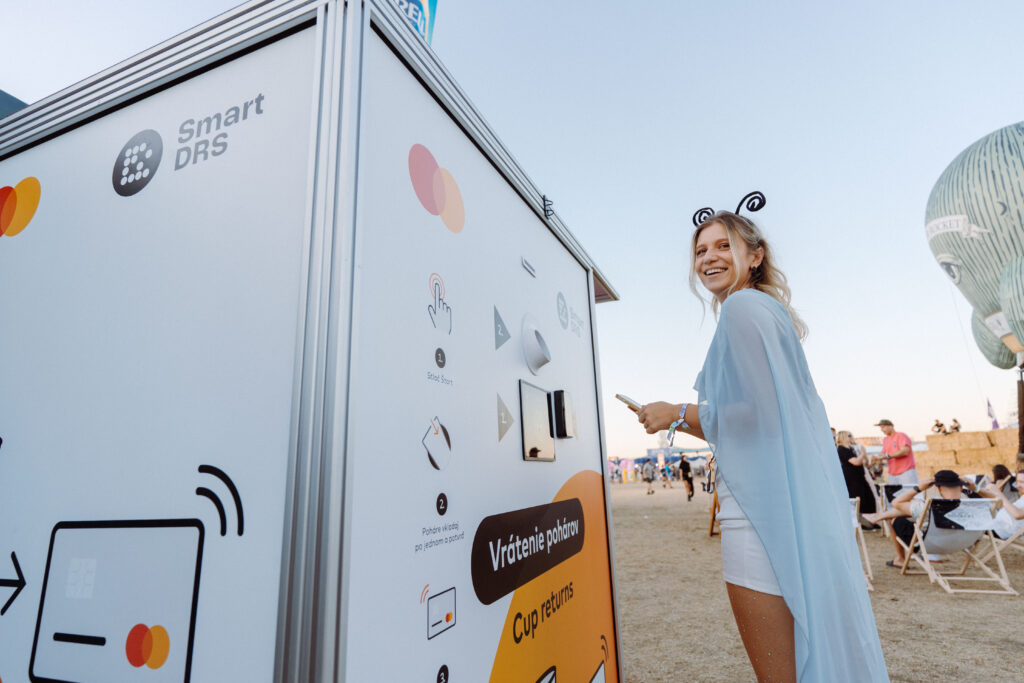
The visitor journey followed four simple actions:
- Start the return at a Smart DRS collection point.
- Present a payment card, mobile phone or smartwatch.
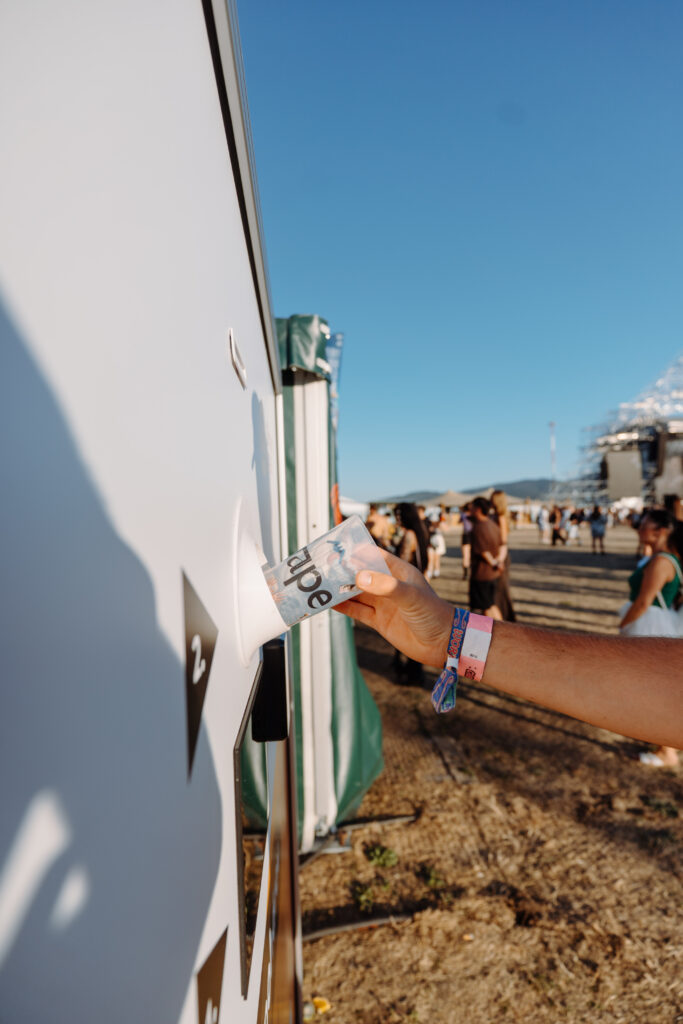
- Insert one or more eligible reusable cups for automated recognition and acceptance.
- Receive the full cup deposit back directly to the payment card.
No mobile application, account registration or QR-code scanning was required. This reduced the number of steps visitors needed to understand and kept the return experience familiar throughout the event.
Deployment across the festival environment
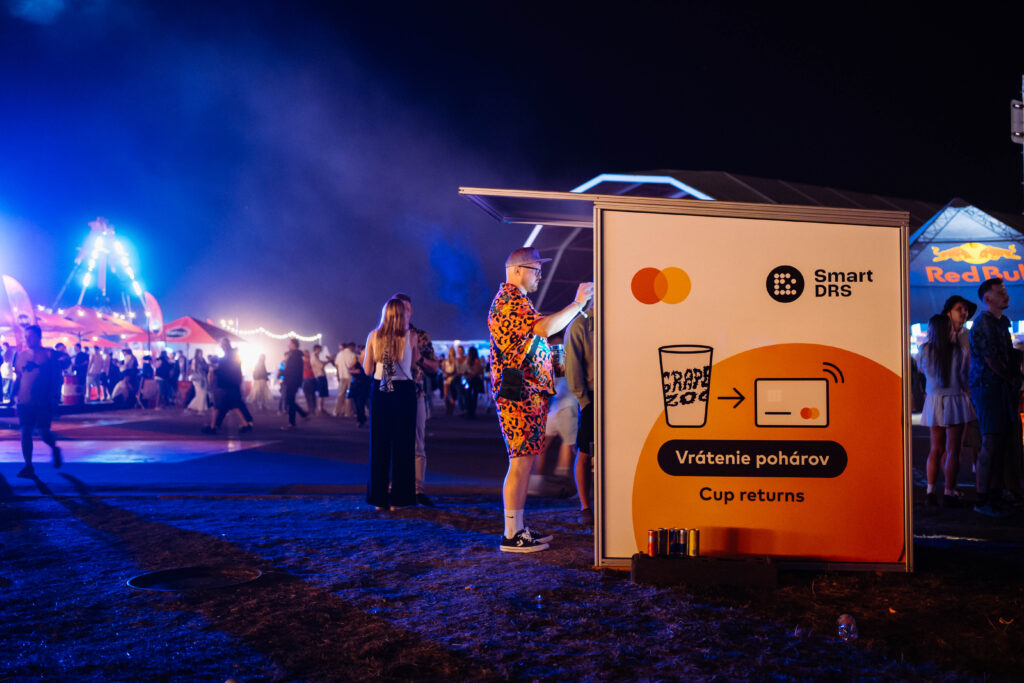
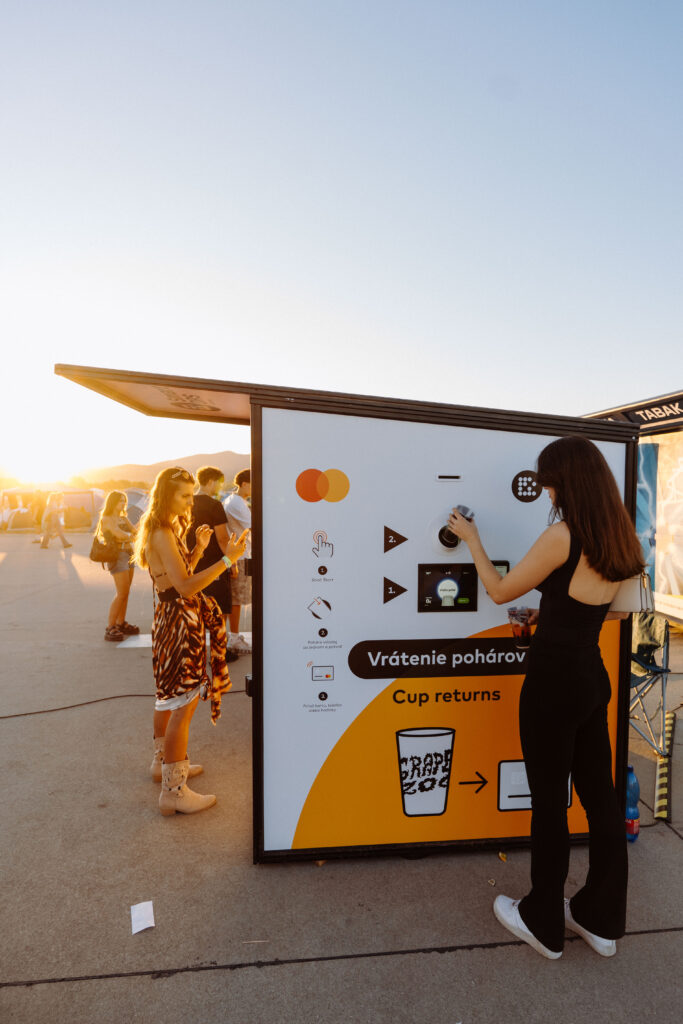
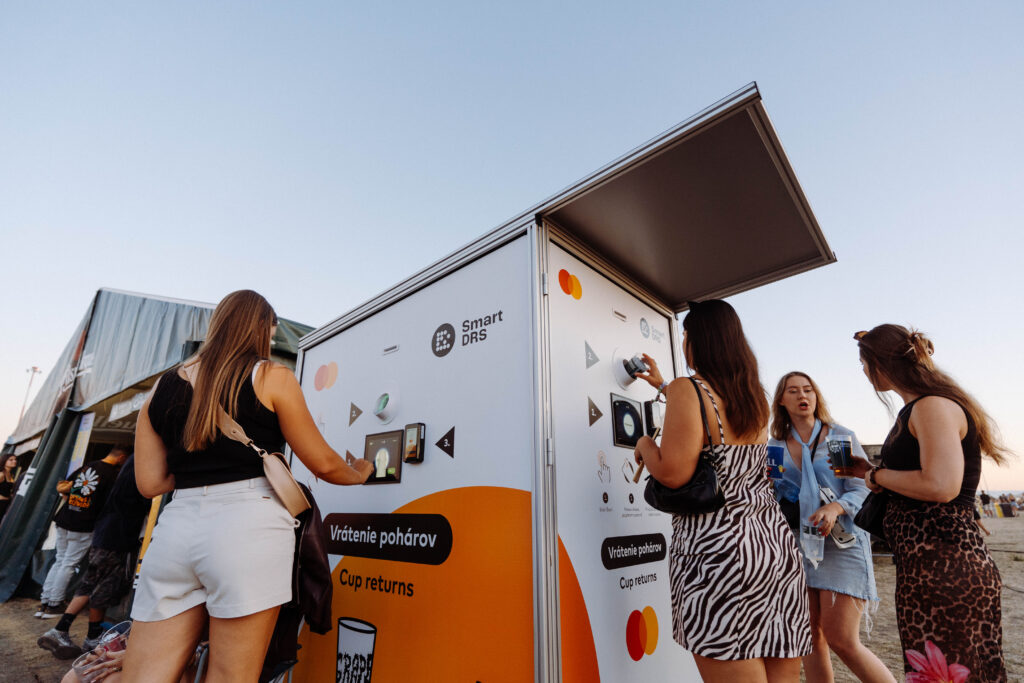
Smart DRS deployed seven Dual stations, providing 14 return modules across the festival environment. The distributed configuration gave visitors access to automated returns from different parts of the site instead of directing all cup-return activity to one central point.
The setup was designed for a festival where visitor movement changes throughout the day. Return access needed to remain useful near active programme areas, along movement routes and as visitors prepared to leave. The deployment therefore treated return infrastructure as part of the site plan rather than as an isolated waste-management function.
Mastercard supported the payment-card functionality used to return cup deposits. After the system accepted eligible cups, visitors received the full cup deposit back directly to their payment card.
Reusable cup returns across the festival journey
| PLANNING FACTOR | GRAPE EVIDENCE | OPERATIONAL RELEVANCE |
| Extended visitor lifecycle | Two-day festival with daytime programming, late-night activity and on-site camping | Return access should remain relevant throughout the event, not only at final departure |
| Distributed infrastructure | 7 Dual stations providing 14 return modules | Capacity can be positioned across different visitor routes and festival zones |
| Multi-cup behaviour | 2.19 cups returned at a time on average | Throughput and internal storage should account for visitors returning several cups |
| Consistent visitor process | The same app-free, card-based process was available throughout the event | Visitors do not need to learn different return methods at different stages of their stay |
| Digital return records | Accepted cups and completed deposit-return activity were recorded digitally | Organisers gain a measurable basis for refining future capacity and placement |
At Grape, returning a cup was not only a final-exit action. Reusable cup returns formed part of a continuous visitor journey that included daytime festival activity, late-night programming, campsite movement and final departure.
The same return steps applied throughout that journey. Visitors did not need to learn a separate night-time process, visit a staffed cash desk or register in advance. The distributed Smart DRS setup allowed the return experience to remain consistent while the context around it changed.
This is the central operational distinction between Grape and a festival built around a single closing surge: infrastructure planning needs to reflect the full lifecycle of the event, not only the headline programme or the expected attendance.
Multi-cup behaviour and capacity planning
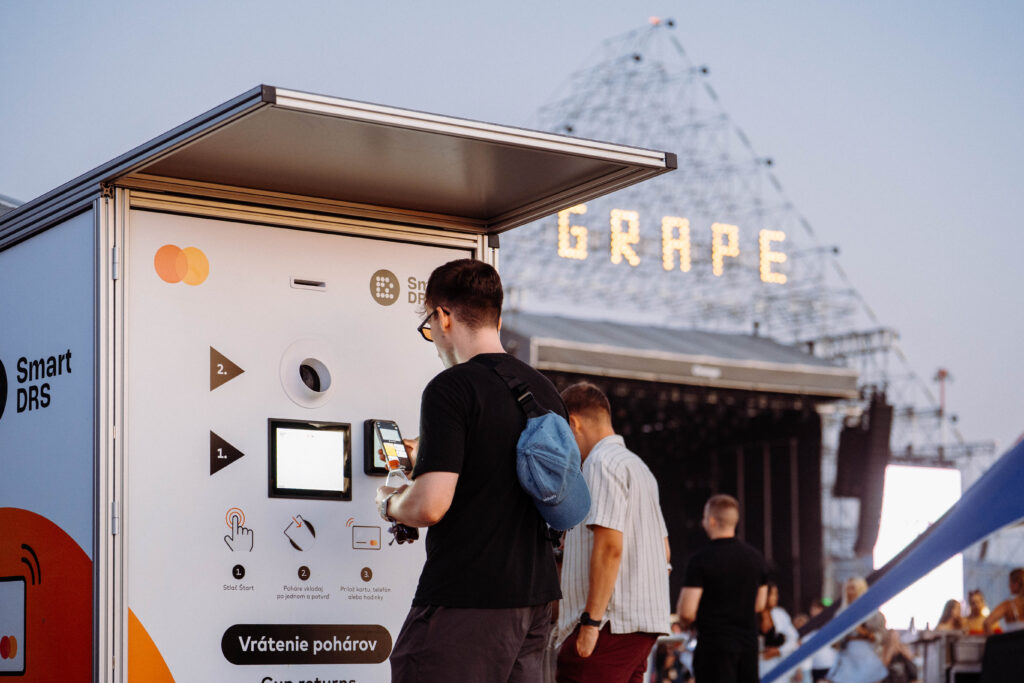
Visitors returned an average of 2.19 cups per return. This matters operationally because station capacity cannot be planned only around the number of people approaching a collection point. A single visitor may return several cups collected by a group or accumulated during part of the programme.
For future deployments, the average number of cups per return should be considered alongside event duration, site layout, the number of active modules and the collection capacity behind each station. Multi-cup behaviour affects both front-end throughput and the rate at which internal storage must be serviced.
Simple for visitors, measurable for organisers
For visitors, the visible experience remained short: present a payment card or NFC-enabled device, return eligible cups and receive the full cup deposit back directly to the payment card. No app, account or manual cash interaction was required.
Behind that short interaction, Smart DRS created a digital record of accepted cups and completed deposit-return activity. This gives organisers a clearer operational view than a purely manual return model and provides a basis for evaluating future station placement, capacity and servicing needs.

Key learnings from Grape Festival 2026
- Plan for the visitor lifecycle, not only the closing moment. Camping, late-night programming and final departure create several relevant return moments.
- Distribute access across real visitor routes. Seven Dual stations and 14 modules made the process available from more than one part of the festival environment.
- Keep the return journey consistent. The same app-free steps worked across changing programme phases and reduced the need for visitor instruction.
- Account for multi-cup returns. An average of 2.19 cups per return affects throughput, internal storage and collection schedules.
- Use operational data to refine the next deployment. Digital return records can support decisions about capacity, visibility, servicing and placement at future editions.
What Grape Shows About Cup Returns at Camping Festivals
Planning cup returns at camping festivals should not be based on attendance alone. Event duration, programme structure, campsite connections, visitor routes, multi-cup behaviour and final-departure patterns all influence the infrastructure required.
The Grape deployment provides a practical framework: map the full visitor journey, distribute return access along real routes, keep the interaction identical across the event and use measured results to refine future capacity. This approach treats cup returns as part of the temporary festival city rather than as a service available only at the exit.
For comparison, the LOVESTREAM Festival case study examines how return demand changed across three days and four stages.
FAQ: reusable cup return systems for camping festivals
Why does a camping festival require a different cup return strategy?
A camping festival creates an extended visitor journey rather than one final exit peak. At Grape Festival 2026, visitors moved between daytime concerts, late-night programming, campsite routes and departure points. Return infrastructure therefore needed to remain accessible at different moments and locations throughout the event.
How was the reusable cup return system deployed at Grape Festival 2026?
Smart DRS deployed seven Dual stations with 14 automated return modules across the festival environment. This distributed setup gave visitors access to the same return process from different parts of the site instead of concentrating returns at one central collection point.
How did visitors return cups and receive their deposits?
Visitors presented a payment card, mobile phone or smartwatch and inserted one or more eligible reusable cups into a Smart DRS station. After the system recognised and accepted the cups, the full cup deposit was returned directly to their payment card. No mobile app, account registration or QR-code scanning was required.
Why should return capacity not be calculated from attendance alone?
Attendance indicates the potential scale of an event but does not show when, where or how visitors will return their cups. Organisers should also consider event duration, programme structure, campsite connections, visitor routes, operating hours, the number of active return modules and multi-cup behaviour.
What does the average of 2.19 cups per return show?
The result shows that visitors regularly returned more than one cup at a time. This may happen when one person returns cups collected by a group or accumulated during part of the programme. Multi-cup behaviour should therefore be considered when planning station throughput, internal storage and cup collection schedules.
What role did Mastercard have in the Grape Festival deployment?
Mastercard supported the payment-card functionality used to return cup deposits. Smart DRS provided the automated cup recognition, return infrastructure and operational data, while visitors received the full cup deposit back directly to their payment cards.
What can other camping festivals learn from the Grape deployment?
Return infrastructure should follow the complete visitor lifecycle, not only the final departure period. Organisers can use the Grape model to map visitor routes, distribute return access across the site, maintain one consistent app-free process and use measured return data to refine future capacity and station placement.
Planning reusable cup returns for a camping festival?
Smart DRS helps festival and venue operators build automated, measurable reusable packaging return systems. Its AI-powered stations recognise eligible cups, support multiple-cup returns and return cup deposits directly to payment cards without requiring an app or account registration.
Explore the Smart DRS reusable cup return solution, discover its performance across different event formats and visitor volumes in our festival case studies, or contact the team to discuss return infrastructure for your next festival, stadium, arena or public event.