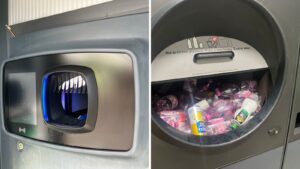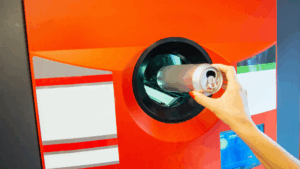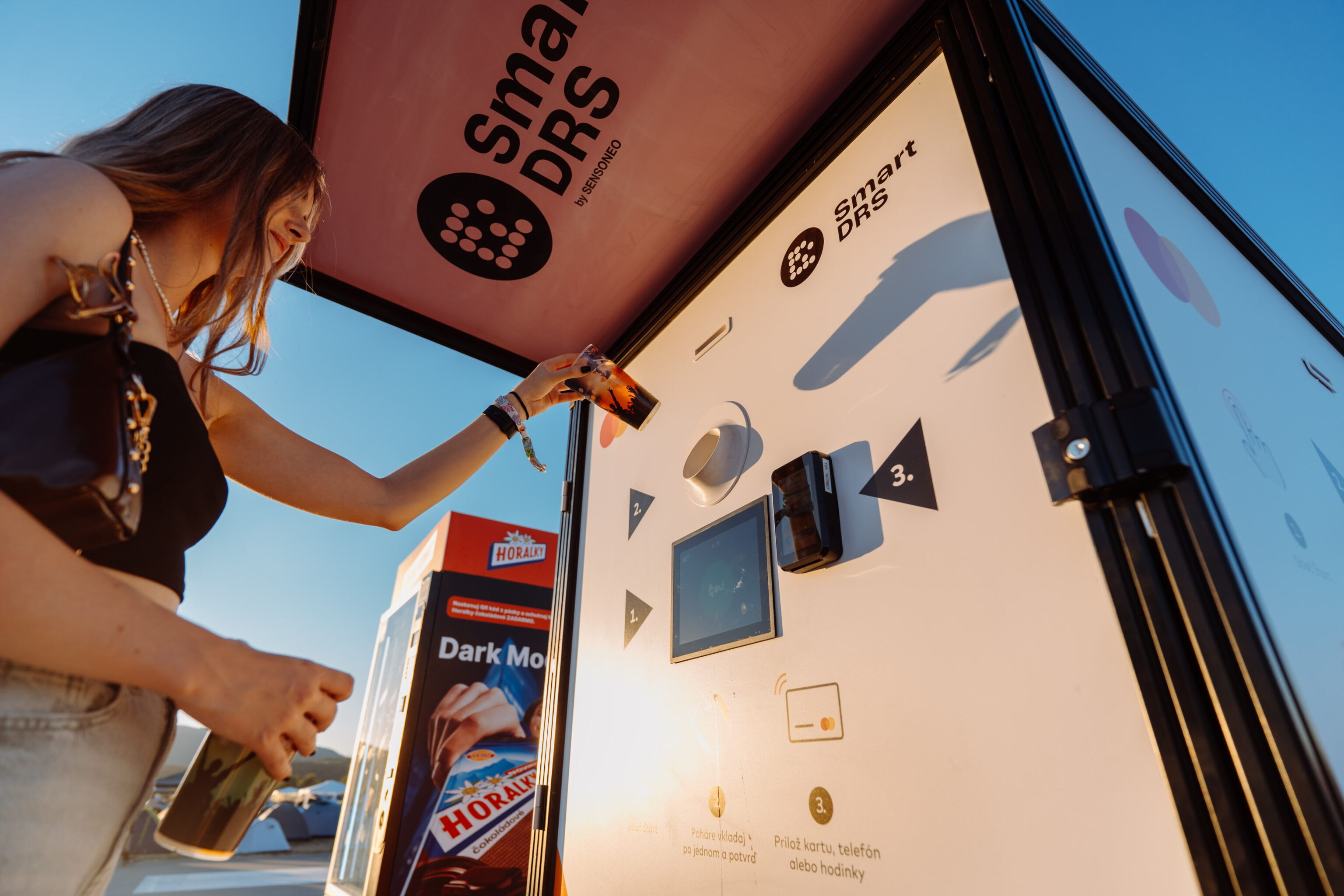
Choosing between reusable packaging identification technologies is only one part of designing an effective return system. Operators must make two connected decisions: how users will return the packaging and how the system will recognise what has been returned.
The return method defines the user journey. Packaging may be handed to staff, placed in an assisted collection unit or returned through a fully automated self-service machine. The recognition technology determines how the system verifies the item and connects it with the correct deposit, refund or tracking record.
Reusable packaging identification technologies include manual verification, AI vision, QR codes, Data Matrix codes, RFID and item-level unique IDs. Each option differs in speed, accuracy, infrastructure requirements, traceability and cost. A technology that performs well at a controlled venue may not be the best choice for a city-wide network, a food-service chain or a reusable packaging pool.
There is therefore no single technology that is right for every reuse system. The best solution is the combination of return method and recognition technology that matches the packaging, operating environment, expected volume, data requirements and user experience.
Start With Two Decisions: Return and Recognition
A reusable packaging system has two separate but closely connected layers:
- The return method determines how the user physically hands over the cup, container or other item.
- The recognition method determines how the system identifies, verifies or records that item.
Keeping these decisions separate makes it easier to compare possible solutions. A return machine, for example, describes the physical collection process. It does not explain which technology – AI vision, a QR code, a Data Matrix code or RFID – recognises the packaging.
The same recognition technology can also support different return methods. A QR code may be scanned by a member of staff, by the user or by an automated machine. Similarly, AI vision can support a compact return point at an event or a larger automated system operating across multiple locations.
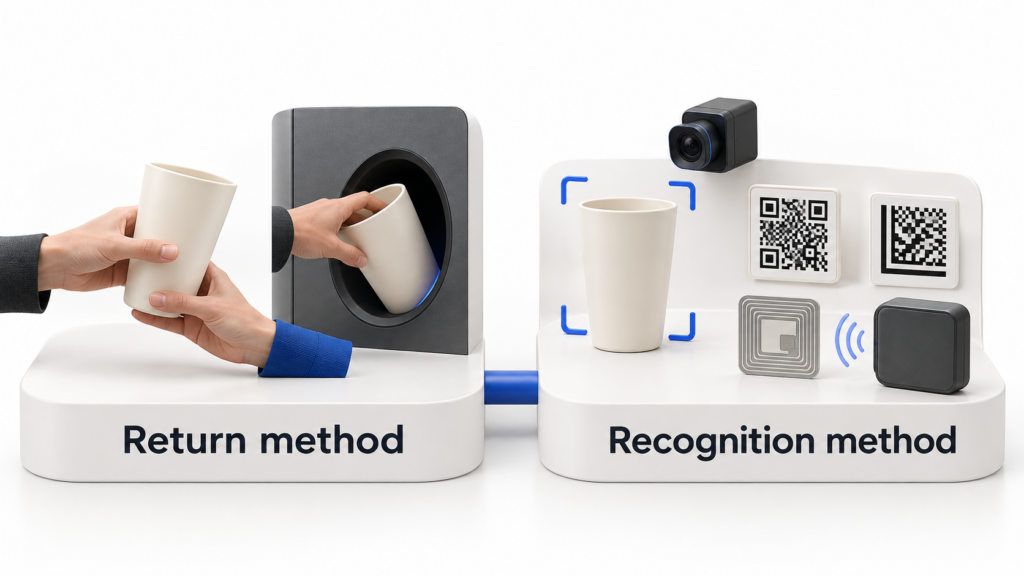
The Main Return Methods
- Manual return: Staff receive and verify the packaging.
- Assisted or semi-automated return: Technology supports part of the process, while staff remain available for supervision or exceptions.
- Fully automated return: Users return packaging independently through a machine or self-service collection point.
The Main Reusable Packaging Identification Technologies
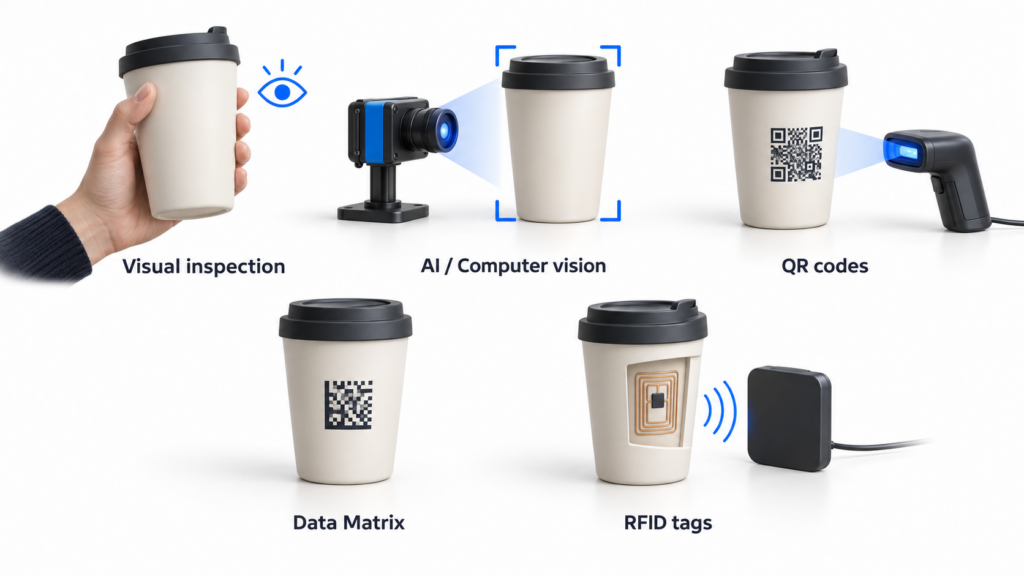
The returned packaging may be recognised through:
- manual visual inspection,
- AI or computer vision,
- QR codes,
- Data Matrix codes,
- RFID tags,
- or a combination of several technologies.
A unique ID may also be assigned to each item. However, a unique ID is not a recognition technology by itself. It is the individual data record that can be encoded in a QR code, Data Matrix code or RFID tag and retrieved when the packaging is returned.
This distinction matters because operators are not choosing one technology in isolation. They are designing a complete return journey: how the user returns the item, how the system confirms its eligibility and how the return triggers the appropriate next step, such as a deposit refund or inventory update.
Compare Manual, Assisted and Automated Returns
The return method determines where packaging is collected, how much responsibility is placed on staff and how independently users can complete the process. It also affects which recognition technologies can be integrated effectively.
| Return method | How it works | Main advantages | Main limitations |
| Manual return | Staff receive, inspect and accept each item | Simple to launch, flexible and suitable for smaller volumes | Labour-intensive, difficult to scale and more dependent on consistent staff decisions |
| Assisted return | Technology handles identification or recording while staff supervise the process | Combines automation with human support and simplifies exception handling | Still requires staffing and may create bottlenecks during peak periods |
| Automated return | A self-service unit recognises and accepts eligible packaging | Supports higher volumes, consistent verification and extended operating hours | Requires suitable infrastructure, system integration and initial investment |
Manual Return
Manual collection can work well in small or controlled environments where return volumes are limited. Staff can visually inspect packaging, separate damaged items and resolve unusual situations immediately.
However, the model becomes more demanding as volumes increase. Every accepted item requires staff time, and the quality of data depends on how consistently returns are recorded. Manual processes can also become a bottleneck when many users arrive at the same time.
Assisted Return
An assisted system introduces technology while keeping staff involved. Employees may help users position items, scan codes or resolve cases where the system cannot recognise the packaging automatically.
This approach works well during pilot projects or at locations where users are unfamiliar with the return process. It reduces some manual work without removing human support completely. Nevertheless, operators should consider whether the staffing requirement remains practical as the system expands.
Automated Return
In an automated system, the user completes the return independently. The unit identifies eligible packaging, rejects unsupported items and records the transaction. Depending on the setup, it may also initiate a deposit refund and provide operators with real-time return data.
Automation is especially valuable where return volumes are high, demand fluctuates or the system must operate across several locations. Its performance, however, depends on more than the machine itself. Recognition speed, acceptance accuracy, refund reliability, user instructions and the placement of return points all shape the final experience.
The right return method therefore depends on expected volumes, operating hours, available staff, location constraints and the level of convenience the system must provide. For a broader look at collection models and operational scalability, see our guide to returning reusable cups at scale.
Compare Reusable Packaging Identification Technologies
Recognition technology determines how a return system confirms that an item belongs to the programme and meets its acceptance criteria. Some methods identify only the packaging type, while others can recognise and track each item individually.
| Technology | What it recognises | Physical marker required | Item-level tracking | Typical strengths | Main considerations |
| Manual inspection | Packaging appearance or predefined criteria | No | Usually no | Simple and flexible | Labour requirements and inconsistent decisions |
| AI vision | Shape, dimensions, colour, print or other visual features | Usually no | No, unless combined with a unique code | Fast, contactless recognition without scanning each code | Requires training, testing and controlled image capture |
| QR code | Printed encoded information | Yes | Possible | Familiar, affordable and readable by common cameras | Requires a visible and readable code |
| Data Matrix | Compact machine-readable data | Yes | Possible | Stores data in a small area and supports item-level identification | Requires appropriate scanners and code placement |
| RFID | Data stored on a radio-frequency tag | Yes | Does not require direct visual contact and can support rapid identification | Higher tag and infrastructure costs | |
| Unique ID | A distinct record assigned to one item | Encoded through another technology | Yes | Enables lifecycle and circulation tracking | Requires a database and reliable data management |
| Hybrid system | A combination of two or more methods | Depends on the combination | Possible | Adds flexibility, verification and redundancy | Greater integration complexity |
These technologies do not all answer the same operational question.
“The key distinction is whether the system only needs to confirm that a package is eligible, or whether it must identify one specific item. AI vision can recognise the packaging type from its visible characteristics, while QR, Data Matrix or RFID can connect an individual item with a digital record.”
Tomáš Vincze, CEO at Smart DRS
AI vision can determine whether an item matches a packaging type that the system accepts, without requiring every cup or container to carry a scannable code. QR, Data Matrix and RFID use a specific marker to retrieve information from a code, tag or linked database. A unique ID goes one step further by distinguishing one physical item from every other item in the system.
Operators should therefore define the required level of identification before selecting the technology. An operator may need to answer only:
Is this an eligible cup or container?
A more complex reuse network may also need to know:
- Which individual item did the user return?
- Where and when did the operator issue it?
- How many circulation cycles has it completed?
- Does it belong to this operator or packaging pool?
- Does the system already associate a deposit or refund with it?
- Does it require inspection, repair or removal from circulation?
More detailed data can improve traceability and inventory control, but it also adds requirements for marking, scanning, software integration and database management. The right choice is the level of recognition that supports the operator’s actual decisions without creating unnecessary complexity.


AI Vision in Reusable Packaging Identification Technologies
Among reusable packaging identification technologies, AI vision offers a fast way to recognise eligible packaging without requiring users to scan a code.
AI vision uses cameras and trained recognition models to evaluate the visual characteristics of returned packaging. Depending on the system, these characteristics may include shape, size, proportions, colour, graphics or other visible features.
Instead of asking the user to locate and scan a code, the return unit analyses the item when it is inserted. If the packaging matches the system’s acceptance criteria, the return can proceed. If it does not, the item can be rejected or directed for additional verification.
Advantages of AI Vision
AI vision can simplify the return experience because it does not require users to find, position or scan a label. This is particularly useful in high-volume environments where every additional step can slow the process and create queues.
Its main advantages include:
- contactless recognition,
- fast and simple returns,
- no need for a visible code on every item,
- the ability to distinguish eligible from unsupported packaging,
- and compatibility with automated self-service returns.
It can also be suitable for existing packaging that was not originally produced with an embedded RFID tag or an individual machine-readable code.
Limitations of AI Vision
AI vision normally recognises a packaging type rather than the identity of one specific item. On its own, it may confirm that an object is an accepted reusable cup, but not whether it is cup number 12,457 or how many times that particular cup has circulated.
Recognition performance can also be affected by the condition and presentation of the item. Significant deformation, visual obstruction, changed graphics or unfamiliar packaging variants may require updated training data or a secondary verification method.
The system therefore needs clear acceptance rules, suitable image capture conditions and testing with the real packaging users will return – not only perfect samples.
When AI Vision Is a Strong Choice:
- users need to return packaging quickly and without scanning,
- the operator accepts a defined range of packaging types,
- item-level tracking is not essential,existing packaging has no unique identifier,
- or the system must process large return volumes with minimal user effort.
When an operation requires individual traceability, operators can combine AI vision with QR, Data Matrix or RFID.
QR and Data Matrix as Reusable Packaging Identification Technologies
QR and Data Matrix codes are two-dimensional codes that can store information directly or connect the packaging to a record in a database. These formats belong to a broader family of 2D barcode standards developed by GS1 to support structured identification and data exchange.Unlike AI vision, which can recognise an item from its appearance, these technologies require the code to be visible and readable during the return process.
Both options can identify a packaging type, batch or individual item. The level of traceability depends on the information encoded in the code and how the operator’s software processes it.
QR Codes
QR codes are widely recognised and can be read by common cameras and scanning devices. They are relatively simple to generate and can support systems in which staff or users scan the packaging during issue and return.
A QR code may contain a general product reference or a unique identifier linked to one specific item. When unique codes are used, the operator can connect each return with data such as its issue location, return point or circulation history.
QR codes are particularly useful when:
- users or staff already interact with smartphones or scanners,
- the code can be printed clearly on the packaging,
- implementation cost needs to remain relatively low,
- or item-level tracking is required without RFID infrastructure.
However, the code must be positioned correctly and remain readable throughout repeated use, washing and transport. Scratches, condensation, food residue, poor contrast or an awkward code position can make scanning less reliable.
The return process must also account for user behaviour. If people need to rotate a cup, search for the code or hold it at a precise angle, each return may take longer.
Data Matrix Codes
Data Matrix codes perform a similar function but can encode information within a more compact printed area. This makes them useful when the available marking space is limited or when the identifier needs to be integrated discreetly into the packaging design.
They are commonly read by dedicated imaging equipment rather than through a consumer-facing smartphone journey. As with QR codes, they can connect each item to an individual database record and support detailed tracking across repeated use cycles.
Data Matrix may be suitable when:
- the packaging provides limited space for marking,
- scanning is performed by controlled equipment,
- item-level identification is required,
- or codes must be integrated into production and operational workflows.
Choosing Between QR and Data Matrix
The decision should not be based only on the physical size of the code. Operators should consider who will scan it, which devices will be used, where it will be placed and how it will withstand repeated washing and handling.
QR codes may be more familiar in user-facing processes. Data Matrix codes may be better suited to compact, machine-operated identification. In both cases, the quality of the complete scanning process matters more than the code format alone.
RFID in Reusable Packaging Identification Technologies
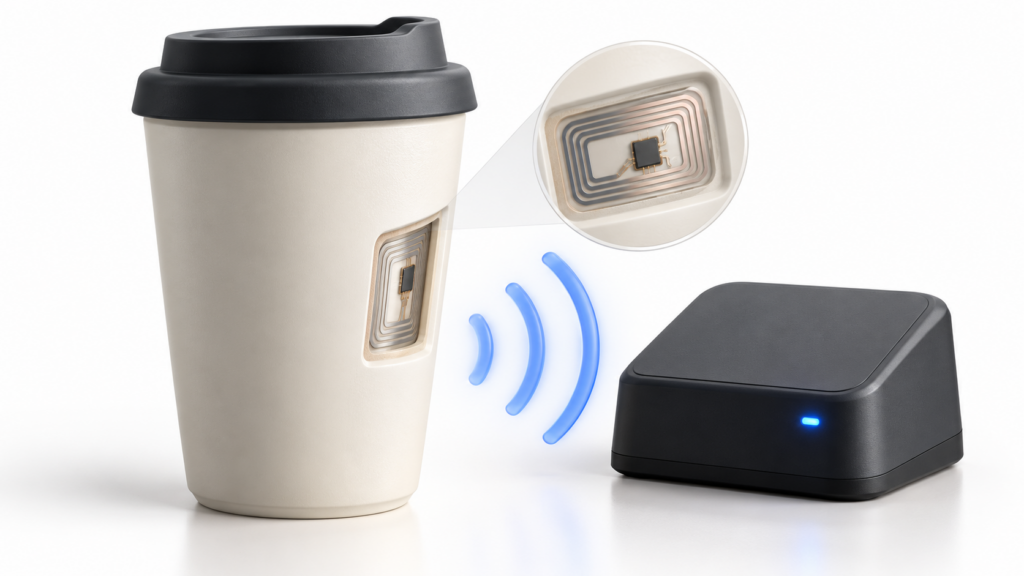
RFID uses radio waves to read information stored on a tag attached to or embedded in the packaging. Unlike QR and Data Matrix codes, the tag does not need to be visually aligned with a camera or scanner.
Each RFID tag can carry or reference a unique identifier. When the item enters the reading zone, the system retrieves that identifier and connects it with the corresponding database record.
Advantages of RFID
RFID differs from visual reusable packaging identification technologies because it uses radio-frequency tags instead of visible codes or packaging features.
RFID can make identification fast and convenient because users do not need to locate or position a printed code. Depending on the technical setup, the system may also be able to identify several tagged items within the reading area.
Its main advantages include:
- no requirement for direct visual contact,
- item-level identification,
- fast machine-operated reading,
- support for automated inventory processes,
- and detailed tracking across circulation cycles.
This makes RFID relevant to larger reuse networks in which packaging moves between multiple collection points, washing facilities, distribution centres or operators.
Limitations of RFID
RFID requires a physical tag on every item as well as compatible readers, antennas and software. This generally makes implementation more complex and costly than using printed codes.
Tag selection and placement also require careful testing. Packaging material, liquids, nearby objects and the surrounding operating environment can affect reading performance. Tags must also withstand repeated washing, handling and temperature changes throughout the expected life of the packaging.
Another consideration is controlling the reading zone. The system must identify the item being returned without unintentionally recording other tagged objects nearby.
When RFID Is a Strong Choice
RFID may be appropriate when:
- individual items must be tracked across a wider network,
- scanning a visible code would slow the return process,
- packaging already supports embedded or durable tags,
- automated inventory management is a priority,
- or multiple operational partners need access to consistent item-level data.
For a smaller or short-term system, RFID infrastructure may be more extensive than necessary. For a large packaging pool with many circulation points, however, the additional traceability may justify the investment.
RFID can also be combined with AI vision. The RFID tag identifies the individual item, while vision verifies its physical type or appearance. This gives the operator two different layers of information rather than relying on a single recognition method.
Unique IDs and Hybrid Systems: Adding Traceability Where It Matters
A unique ID is a distinct digital identity assigned to one physical cup, container or other reusable item. It allows the system to distinguish that item from every other piece of packaging in circulation.
The ID may be encoded in a QR code, Data Matrix code or RFID tag. It can also be linked to information stored in a central database. For this reason, a unique ID is not a separate recognition technology. It is the data layer accessed through another technology.
What a Unique ID Can Record
Depending on the system design, an individual packaging record may include:
- packaging type and manufacturer,
- date and location of issue,
- return location and time,
- number of recorded circulation cycles,
- deposit or refund status,
- washing and inspection events,
- ownership or packaging-pool membership,
- and whether the item is active, damaged or retired.
This level of traceability can support inventory planning, lifecycle analysis and loss detection. It may also help operators understand how packaging moves through a network rather than only how many items were returned.
However, collecting more data is useful only when the operator has a clear purpose for it. Item-level tracking creates additional requirements for reliable scanning, system integration, database management and data governance. If the operator needs only to confirm that a returned cup is eligible, a unique ID may add unnecessary complexity.
Why Operators Use Hybrid Recognition
Hybrid systems combine reusable packaging identification technologies when one method cannot meet every operational requirement.
A hybrid system combines two or more recognition methods. Each technology performs a different task or provides a secondary verification layer.
Examples include:
- AI vision to recognise the packaging type and RFID to identify the individual item,
- AI vision as the primary method and a printed code for exceptions,
- a Data Matrix code for item-level tracking and manual inspection for damaged packaging,
- or RFID for logistics and AI vision at user-facing return points.
Hybrid recognition can improve flexibility and allow different parts of the system to use the method best suited to their needs. A washing facility, for example, may require detailed item-level data, while a festival return point may prioritise speed and simplicity.
The trade-off is greater technical and operational complexity. Multiple technologies must exchange data correctly, and operators need clear rules for what happens when the methods produce different results.
A hybrid system is therefore most valuable when every added recognition layer solves a defined operational problem. Combining technologies without a clear purpose can increase costs without creating a better return experience.
How to Choose Between Reusable Packaging Identification Technologies
The right system is not necessarily the one with the most advanced identification technology. It is the one that can process expected return volumes reliably, collect the necessary data and keep the return journey simple for users.
Operators should evaluate the following factors before selecting a solution.
1. Expected Return Volume
Estimate both total returns and peak demand. A manual return point may handle a small, controlled location but may struggle when hundreds of users return packaging within a short period.
Operators should design the system for peak periods rather than average activity alone.
2. Required Level of Identification
Decide whether the system needs to recognise:
- an accepted packaging category,
- a specific packaging model,
- a batch of items,
- or every individual item.
AI vision may be sufficient for verifying an accepted packaging type. QR, Data Matrix or RFID may be more appropriate when individual traceability is required.
3. Packaging Design and Material
Consider whether the packaging can carry a printed code or embedded RFID tag. The identifier must remain functional throughout repeated washing, transport, stacking and handling.
Existing unmarked packaging may be easier to integrate into a vision-based system.
4. User Experience
Count the actions required to complete a return. Users may need to locate a code, scan an item, insert packaging individually or follow instructions on a screen.
A technically capable system can still perform poorly if the return process is unclear or takes too long.
5. Operating Environment
A controlled indoor location has different requirements from an outdoor festival, a stadium, a takeaway network or a city-wide packaging pool. Lighting, connectivity, weather, available space and staff support can all influence the decision.
6. Data and Integration Requirements
Define which information the operator actually needs and where it should be sent. The recognition system may need to connect with:
- deposit and refund processing,
- inventory management,
- washing and logistics systems,
- operator dashboards,
- or packaging-pool databases.
Collecting data without a plan for using it creates complexity rather than operational value.
7. Total Cost of Ownership
The comparison should include more than the initial equipment price. Operators should also consider tags or printed identifiers, software integration, maintenance, staff time, connectivity, damaged packaging and future expansion.
8. Ability to Scale
Choose a system that can support additional locations, packaging formats and return volumes without requiring a complete infrastructure replacement.
A pilot should therefore test the complete process under realistic conditions: real packaging, real users, peak demand, damaged items, failed recognition and refund exceptions. This reveals whether the selected combination works operationally – not only whether the technology works in isolation.
From Recognition to Refund: How Smart DRS Connects the Return Journey
Recognition is only one part of a functioning return system. Once the system accepts the packaging, it must record the return, connect it with the deposit process and complete the refund reliably.
Smart DRS brings these steps together through an automated return system for reusable cups. A user returns eligible reusable packaging at a self-service collection point, the system verifies the item and completes the deposit refund directly to a payment card. The process does not require cash, an app or account registration. This reduces the number of steps for the user while giving the operator structured data about return activity.
Operators can design the recognition layer around the technology or combination of technologies that best meets their packaging and operational requirements. The purpose is not to add the most complex identification method available. It is to create a return process that is:
- fast enough for expected demand,
- accurate enough for the accepted packaging range,
- simple for first-time users,
- connected to a convenient refund method,
- and supported by data the operator can use.
This is particularly important in environments with concentrated return peaks, multiple collection points or limited staff capacity. Recognition speed, physical throughput and refund processing must work as one system. Improving only one part of the journey may simply move the bottleneck elsewhere.
See how automated recognition and card refunds worked in practice in our reusable cup return system case study from the 2026 IIHF U18 Championship.
For operators, the value of automation is therefore not limited to recognising a cup or container. It lies in connecting packaging acceptance, deposit refunds and operational data in one coordinated process.

Frequently Asked Questions About Reusable Packaging Recognition
Which return and recognition technology is right for a reusable packaging system?
The right choice among reusable packaging identification technologies depends on return volume, packaging design, operating environment, required data and available infrastructure. AI vision supports fast recognition without code scanning. QR and Data Matrix support printed identification, while RFID enables contactless item-level tracking. Some operations benefit from combining more than one method.
What is the difference between a return method and a recognition technology?
The return method describes how users physically hand over packaging, such as through a staffed point or an automated machine. Recognition technology determines how the system verifies the returned item. One recognition technology can support several return methods.
Can AI vision identify individual reusable cups or containers?
AI vision generally recognises a packaging type from its visual characteristics. Identifying one specific item usually requires a unique identifier encoded in a QR code, Data Matrix code or RFID tag. AI vision can be combined with these technologies when both visual verification and individual traceability are needed.
Are QR codes or RFID better for reusable packaging?
Neither is universally better. QR codes are generally easier and less expensive to implement but must remain visible and be positioned for scanning. RFID does not require visual alignment and supports contactless item-level identification, but it requires tags, readers and more extensive infrastructure.
Can existing reusable packaging be used with an automated return system?
Yes, depending on the selected recognition method and the condition of the packaging. AI vision may recognise existing packaging without adding an individual marker. Systems based on QR, Data Matrix or RFID require each item to carry the appropriate readable code or tag.
Can a deposit be refunded without an app or account?
Yes. A return system can connect accepted packaging with a refund directly to a payment card. This allows users to complete the return without downloading an app, creating an account or receiving cash.
Choose Reusable Packaging Identification Technologies Around the Return Journey
Operators should not choose recognition technology based on one feature or specification. Instead, they should consider what the system needs to recognise, how quickly it must process returns and which information creates genuine operational value.
Manual inspection may be sufficient for a small and controlled operation. AI vision can support fast returns without requiring users to scan a code. QR and Data Matrix can connect packaging with digital records, while RFID can provide contactless item-level identification across a wider network. Hybrid systems combine these capabilities when one method alone cannot meet all requirements.
When comparing reusable packaging identification technologies, operators should focus on the complete return journey rather than one feature in isolation.
The final decision should connect four elements:
- the physical return method,
- the packaging identification technology,
- the required data and integrations,
- and the deposit refund experience.
Operators must test these elements as one complete process. Recognition may be technically accurate, but the system will still underperform if users cannot find the return point, the process creates queues or the refund is difficult to complete.
Smart DRS combines automated packaging returns, recognition and card-based deposit refunds in one user journey—without requiring cash, an app or account registration.
Planning a reusable packaging system? Contact Smart DRS to discuss the return method and recognition technology that best fit your packaging, locations and expected volumes.