In just a few months, Smart DRS has expanded from individual reusable cup deployments to international sporting events, major music festivals, cultural and business events, and continuous urban operations. This diversity shows that automated return infrastructure can adapt to different event formats, visitor flows and reuse systems. By late August 2026, Smart DRS had already processed more than 150,000 reusable cup returns.
AT A GLANCE
- 150,000+ reusable cup returns processed between the end of April 2026 and the end of August 2026
- 44,300+ reusable cups returned during the 2026 IIHF U18 World Championship
- Nearly 43,000 cups returned during three days at LOVESTREAM Festival
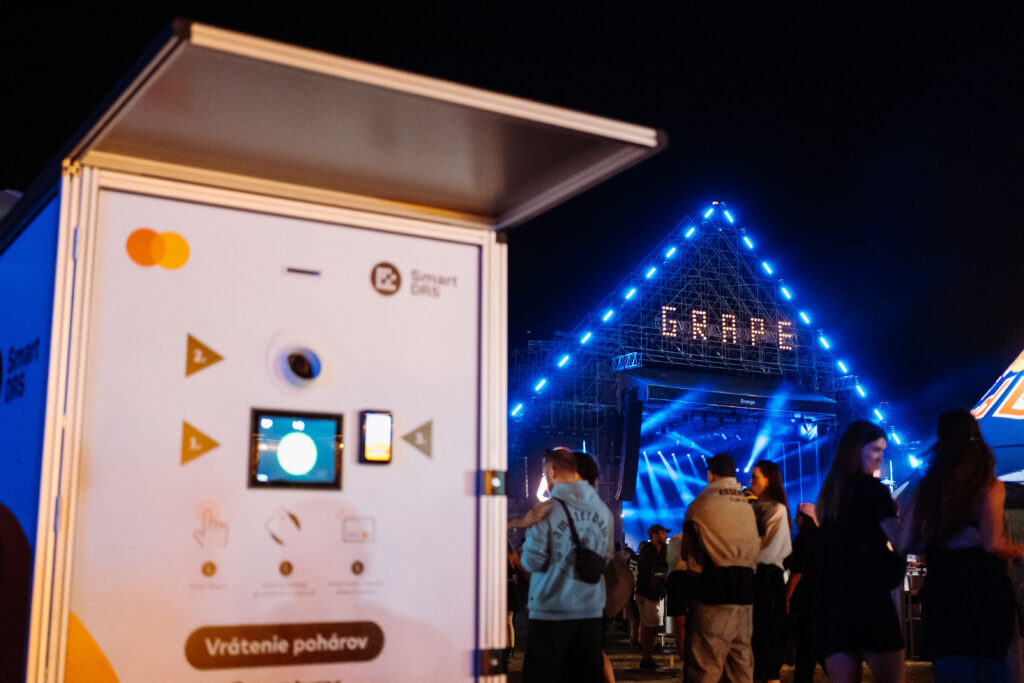
- 28,500 reusable cups returned during three days at Grape Festival
- From one-day events to full-season operations and permanent venues
- One technology platform designed for both reusable and single-use deposit packaging
A few months that changed the scale of reuse deployments
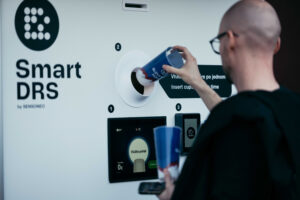
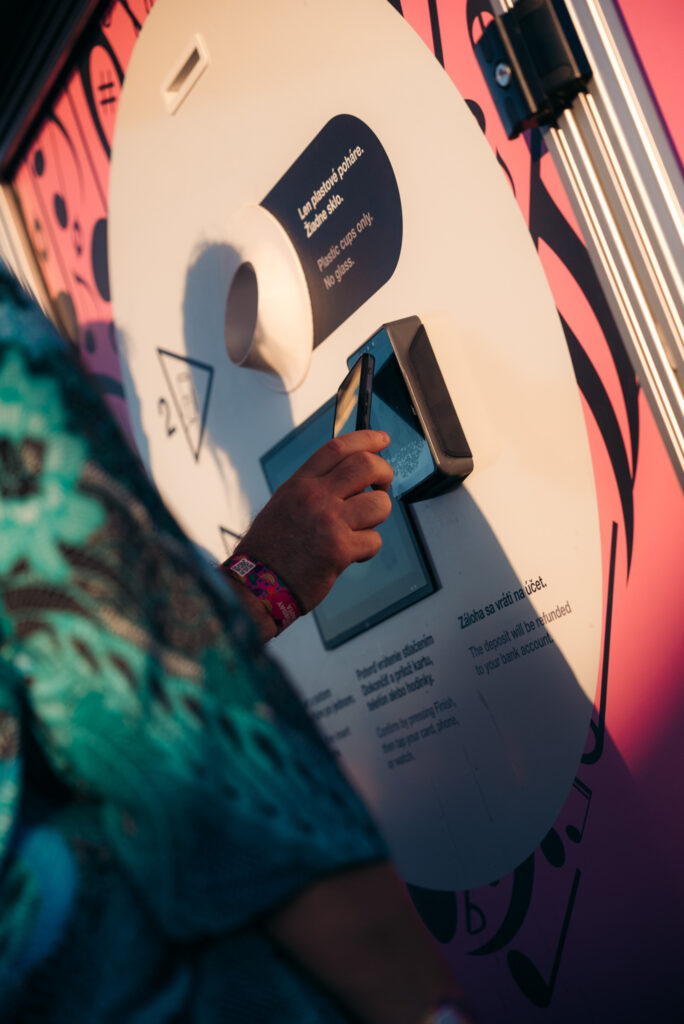
For reusable packaging, the cup itself is only one part of the system. To circulate repeatedly, it also needs a return process that visitors are willing to use and that operators can manage at scale. That operational layer has become the focus of Smart DRS: automated return stations that identify eligible reusable cups and process the deposit refund without requiring staff, cash handling, an app or user registration.
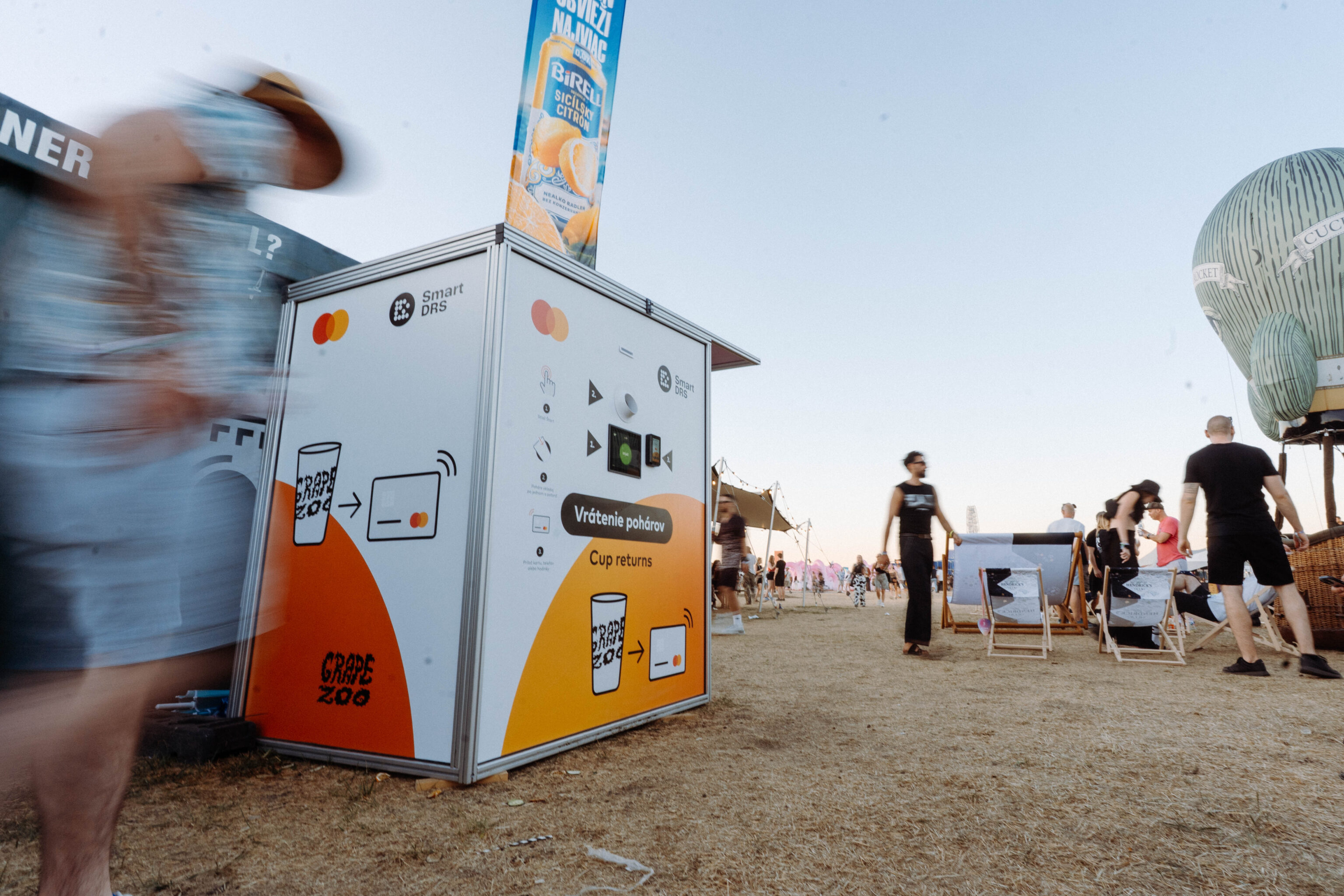
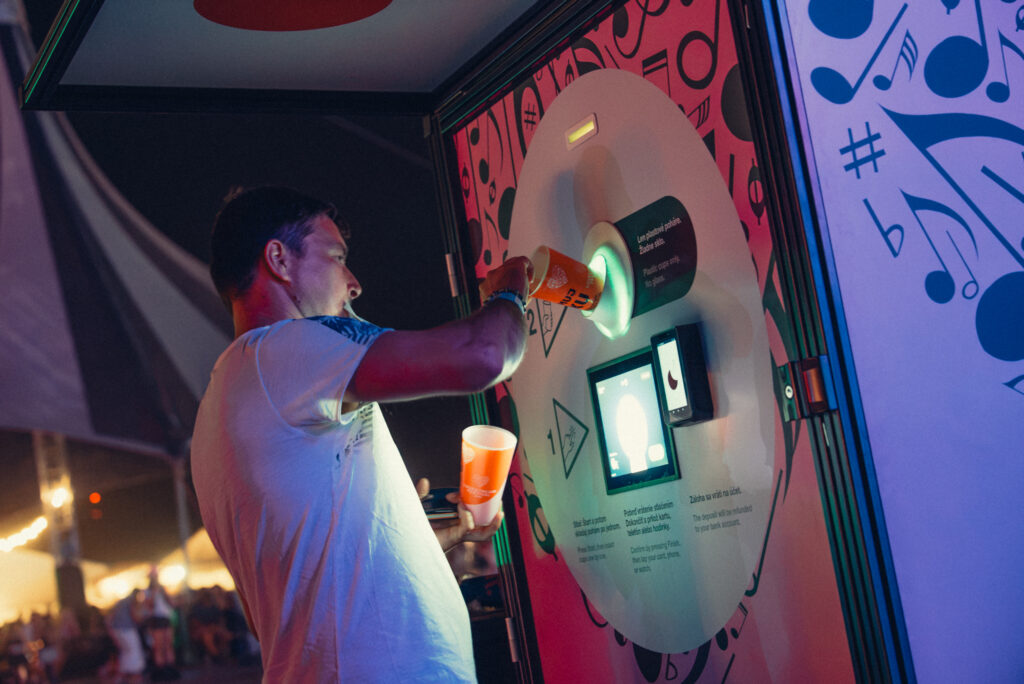
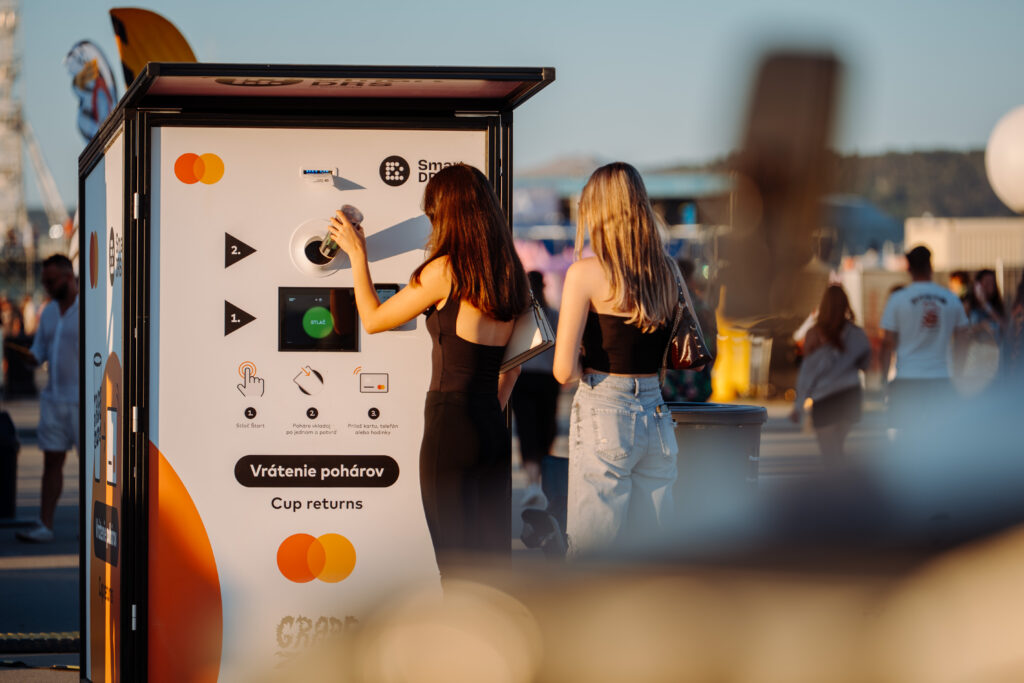
What has changed most visibly in 2026 is not the principle of the technology, but the speed and breadth of its deployment. Within a matter of months, Smart DRS stations have appeared in environments with very different operating patterns: indoor ice hockey arenas, large open-air music festivals, cultural and community events, business and networking events, an urban summer venue and recurring public events in Prague. Grape Festival added another major music event to that mix in August, introducing Smart DRS cup-return machines with a €2 deposit returned to the visitor’s account after the cup was accepted.
This variety is an important indicator of scalability. A return system that works only in one tightly controlled event format is difficult to replicate. A system that can be configured around different cup designs, visitor volumes, refund values, venue layouts and back-of-house processes has a much clearer path to wider adoption.
From 29 hockey games to almost 43,000 festival cup returns
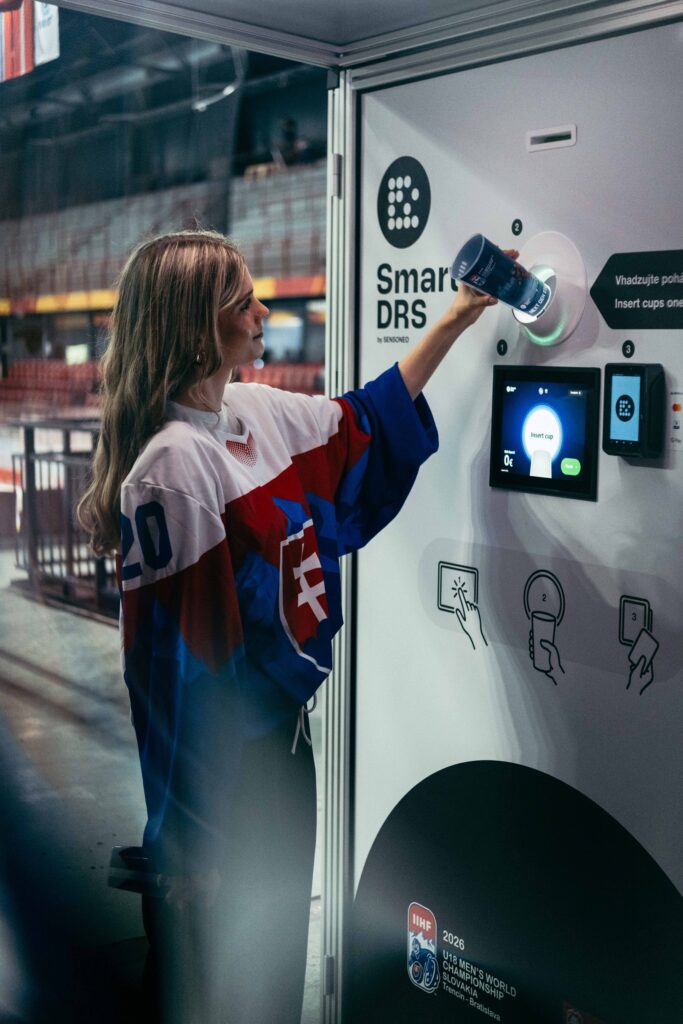
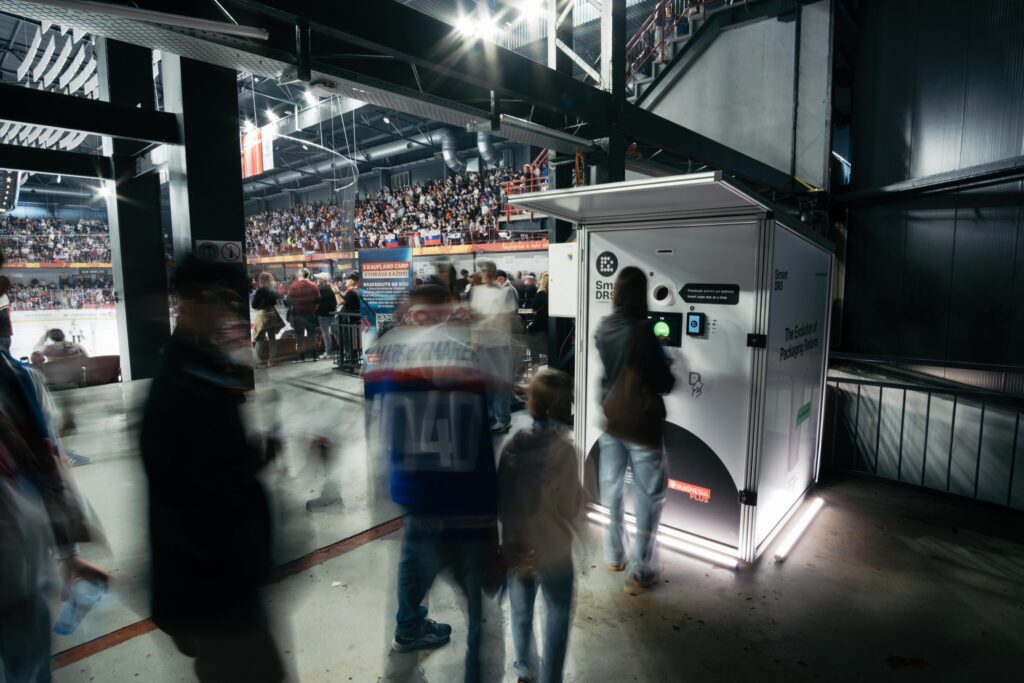
The first large-scale proof point came from the 2026 IIHF Ice Hockey U18 World Championship in Slovakia. Across 29 games and nine match days in Bratislava and Trenčín, eight Smart DRS return stations formed part of the championship’s closed-loop reusable cup system. More than 55,000 beverages were served in 23,000 reusable cups, and more than 44,300 cup returns were processed through the automated stations — close to 5,000 per day.
The deployment was significant not only because of volume, but because it placed automated returns inside the operational reality of two busy sports arenas. Dedicated return points allowed fans to return cups away from concession counters, while catering staff could focus on service rather than collecting used cups and handling deposit refunds. Returned cups were washed and brought back into circulation, completing multiple use cycles during the tournament.
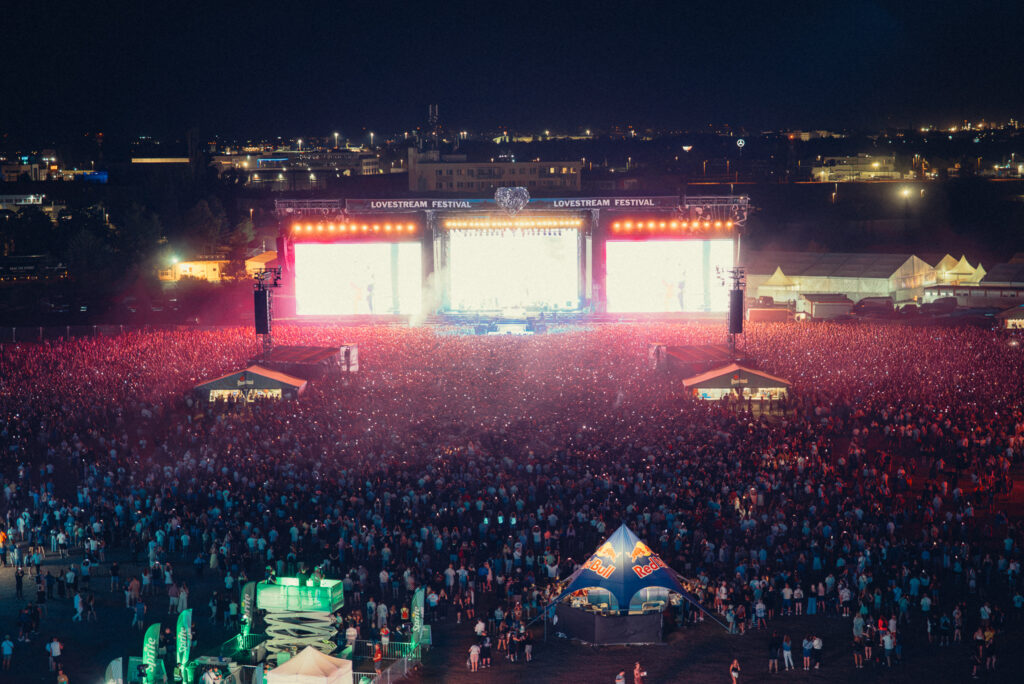
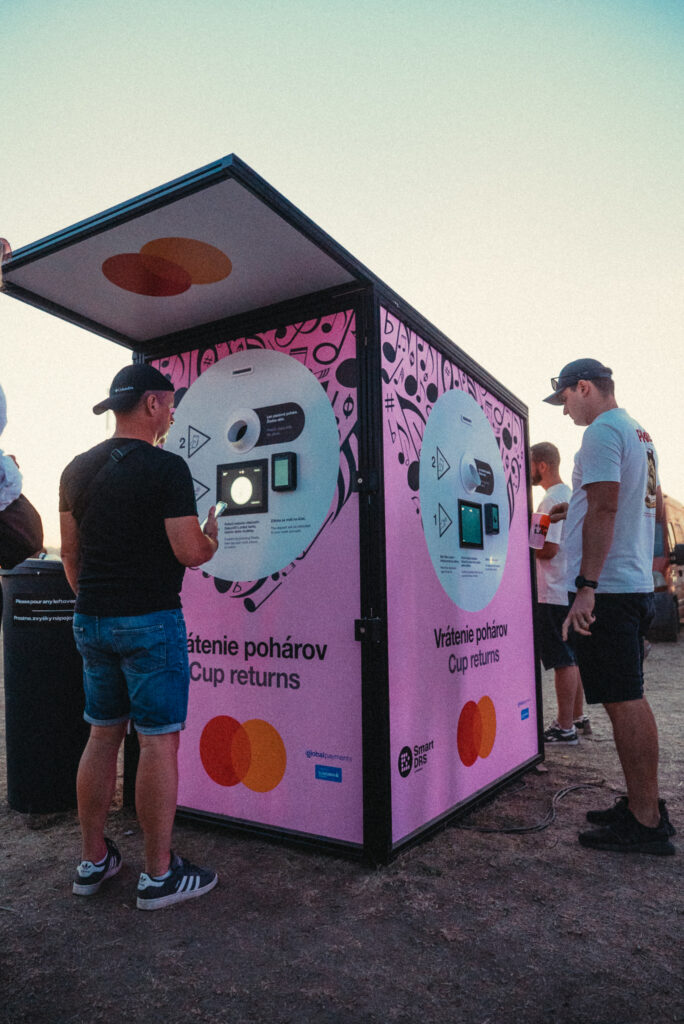
A few months later, LOVESTREAM Festival demonstrated the same principle in a very different setting. Nine Smart DRS Dual stations provided 18 return points across one of Central Europe’s major music festivals. During three festival days, almost 43,000 reusable cups were returned. Visitors could insert their cups and receive the €3 deposit back to a payment card within seconds, without cash, vouchers, registration or an app.
Together, the two deployments show the same infrastructure operating across two very different high-traffic environments: scheduled arena peaks around 29 sports games and continuous visitor movement across a multi-stage outdoor festival.
Largest deployments at a glance
| Deployment | Event type | Duration | Cups returned | Avg. cups per return transaction | Avg. cups returned per day |
| IIHF U18 World Championship 2026 | International sports championship | 9 match days / 29 games | 44,300+ | ~2.5 | ~5,000 |
| LOVESTREAM 2026 | Large music festival | 3 days | Nearly 43,000 | ~2.0 | ~14,300 |
| Grape Festival 2026 | Music festival | 3 days | 28,500 | Slightly over 2 cups | ~9,500 |
Note: “Average cups” refers to cups per return transaction, not per individual visitor.
Scale is also about diversity, not only volume
Another major-scale deployment followed at Grape Festival. Over the three-day festival, seven Smart DRS stations in the Dual version handled 28,500 reusable cup returns – an average of 9,500 cups per day. Visitors returned slightly more than two cups per return transaction on average, further demonstrating the system’s ability to process high return volumes in a busy festival environment while keeping the return journey simple and fully automated.
Beyond one-off events, Smart DRS is also proving its role in continuous venue operations. Two stations have been operating at Tyršák, a popular riverside leisure venue in Bratislava, since mid-July, processing an average of 618 reusable cup returns per day. This provides a different test of the technology: consistent everyday use rather than concentrated festival peaks.
The model has also crossed borders. Občanská plovárna in Prague became the first venue in Czechia to introduce automated reusable cup deposit refunds directly to payment cards. Following the initial deployment, the venue has continued to use Smart DRS at public events where drinks are served in reusable cups. The solution is progressively moving across an even broader range of operating environments — from sports, cultural and food events to longer-term applications in football and ice hockey arenas.
Why the same technology can move between events so quickly
Rapid deployment is possible because Smart DRS is designed around the existing reuse operation rather than requiring the operation to be rebuilt around the return machine. The system can work with reusable cups already selected by the organiser and integrate with existing washing, logistics and other back-of-house processes.
Cup validation can also be configured for the project. AI-based visual recognition can identify eligible items according to their shape, dimensions and design profile, while the platform can also support QR codes, Data Matrix, RFID and other identifiers. That flexibility reduces dependency on a single cup supplier or identification method and makes the same return concept transferable between venues and markets.
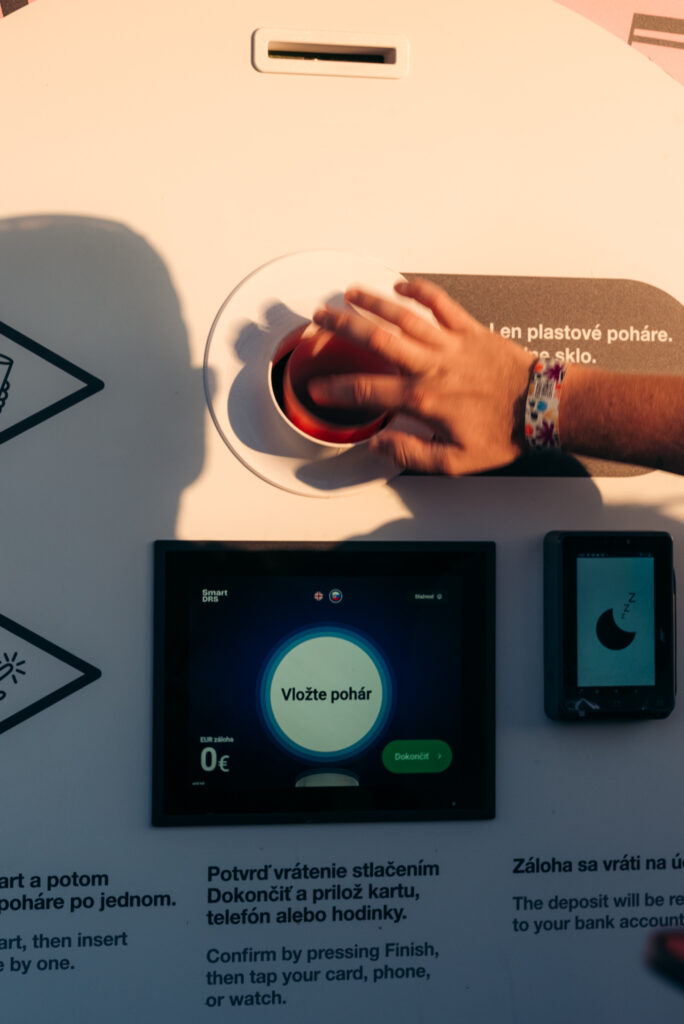
For visitors, the interaction remains deliberately simple. One or more cups can be returned, the eligible items are verified automatically, and the deposit can be refunded directly to a payment card. For organisers, automation separates the return flow from beverage sales, reduces manual handling and creates measurable data on how the return system is being used.
From successful deployments to international scale
The pace of adoption over recent months provides a practical signal that automated reusable packaging returns are moving beyond isolated pilots. Smart DRS has already operated across event types that place very different demands on return infrastructure, from international sport and major festivals to recurring public events and season-long hospitality operations.
The next step is geographic scale. The technology is designed for deployment in stadiums, arenas, festivals, venues, campuses and other controlled environments in different markets, while maintaining the flexibility to integrate with local cup systems and operational processes. This makes reuse a natural first route for expansion – but not the only one.
In the next phase, Smart DRS is also preparing to enter standard national Deposit Return Schemes in additional countries, where Smart Collection Points can complement existing collection networks at selected locations. This creates a second route to scale: alongside reusable packaging at events and venues, the same technology platform can serve as an additional, flexible collection point for single-use beverage containers within established DRS infrastructure.
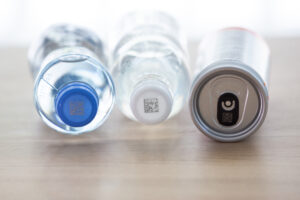
Smart DRS was developed as a return technology for both reusable and single-use deposit packaging. For single-use beverage containers, the platform combines unique container identification, AI-powered verification and Smart Collection Points, and supports PET bottles, aluminium cans and glass bottles. It can operate as an independent collection method or complement traditional return infrastructure.
That shared technology base is strategically important. The experience gained from rapidly deploying reusable cup returns in real-world, high-traffic environments strengthens the operational foundation for a broader ambition: making packaging return infrastructure easier to deploy and scale, whether the next project is a festival, a stadium, a city, a retail network or a national Deposit Return Scheme.
Explore Smart DRS
Smart DRS provides automated return technology for reusable and single-use deposit packaging. Explore the reusable cup return solution, browse Smart DRS case studies, or learn more about Smart DRS for single-use packaging.
Contact: tomas.vincze@smartdrs.com | +421 902 715 571