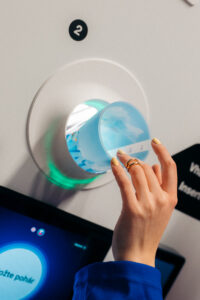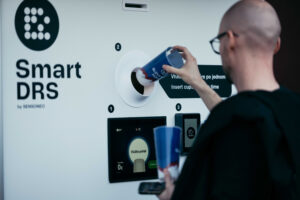
Refunding deposits for reusable cups directly to payment cards brings together AI-powered recognition, automated collection and payment infrastructure. Michal Kitko, Country Manager of Global Payments Slovakia, discusses what joint deployments with Smart DRS at festivals and stadiums have revealed, and what it takes to ensure reliable operations at high-attendance events.
Smart DRS and Global Payments have already cooperated at several sporting and cultural events, including the IIHF U18 World Championship and LOVESTREAM Festival, events that have been all-together attended by nearly 200.000 visitors.

In the first instalment of the Smart DRS Reuse Interview Series, we speak with Michal Kitko about lessons learned from these projects and the elements that must work together to make deposit refunds simple for visitors and reliable for event organisers.
This interview has been edited and condensed for clarity.

What was your initial reaction to the possibility of refunding deposits directly to a payment card?
“My first reaction was: finally.”
Michal Kitko, Global Payments
I saw it not only from a partner’s perspective, but also as a potential visitor to a festival or stadium. A payment company can handle only one part of the overall process. Visitors, however, do not think about the individual technologies involved or how many partners contribute to the solution. They simply expect to return a cup and receive their deposit back.
By working with a technology partner such as Smart DRS, we can bring these components together into one integrated solution. That is why, from the outset, the concept felt more like a natural next step than something entirely new.
What happens after a visitor taps their payment card?
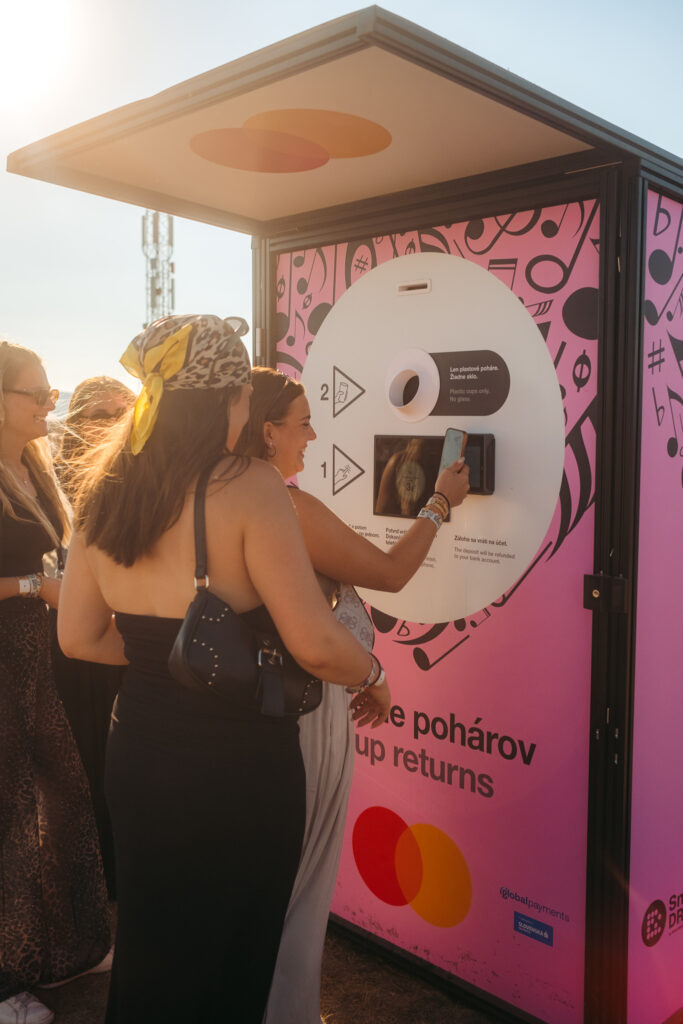
Once Smart DRS has verified the returned cups and calculated the total deposit value, the visitor taps their payment card, phone or smartwatch. The payment terminal then initiates a request to refund the corresponding amount.
Global Payments processes the request through its payment infrastructure and the card network, forwarding it to the bank that issued the card. The interaction at the return station takes only a few seconds, although the time it takes for the funds to appear in the visitor’s account may depend on the issuing bank and the card used.
What did the first real-world deployments reveal?
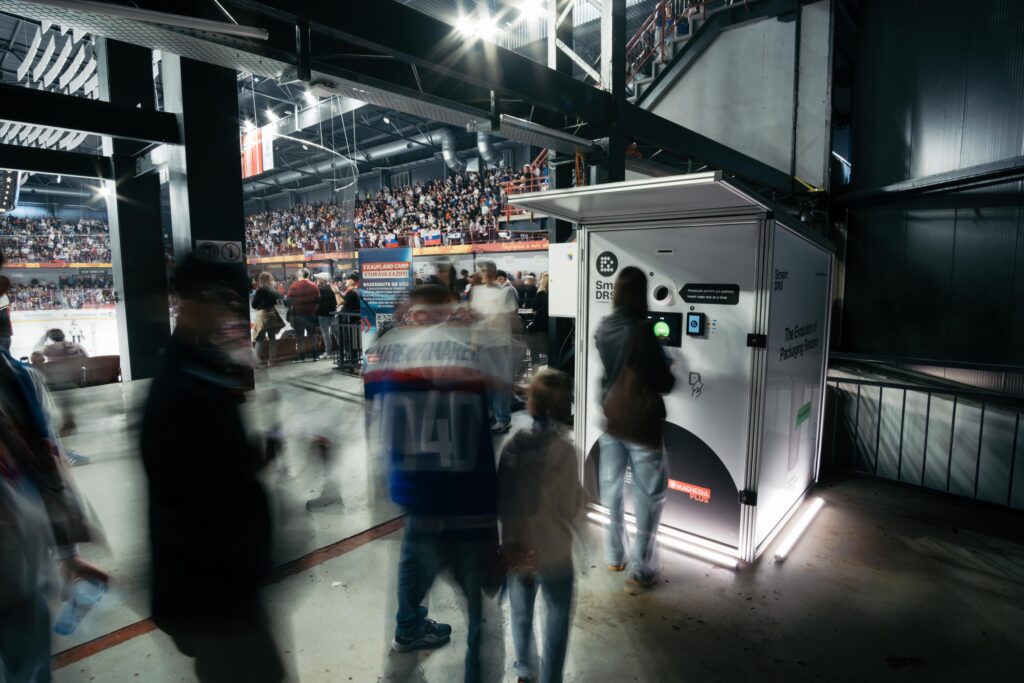
Real-world operations reveal far more than testing in a controlled environment. Event visitors come from different countries and use cards issued by a wide range of banks and card providers. The joint deployments therefore made it possible to test the entire process under varied conditions and at different levels of demand.
The results confirmed the reliability of the automated process: 96-98% of deposit refunds were successfully processed directly to payment cards without requiring further intervention. When a refund could not be processed automatically to a card, an alternative payout method was available depending on the setup of the specific event. As a result, every visitor received their deposit back..
Can the system handle sudden peaks in demand?
Festivals and stadiums are unique in that large numbers of visitors often want to return their cups at the same time, for example, after a concert, a match or the event itself has ended.
“From the perspective of our payment infrastructure, this is standard operation. We are equipped to process significantly higher transaction volumes.”
Michal Kitko, Global Payments
The greater challenge arises on site. Reliable payment processing alone is not enough. Visitors must be able to return their cups quickly, while the operations team needs a clear overview of where queues are forming or return stations are reaching capacity.
At LOVESTREAM, the return-station network recorded 4,002 cup returns during the busiest hour. Peaks of this scale reveal whether the entire process has been designed effectively from the number and placement of stations to visitor throughput and the on-site team’s ability to respond to changing conditions.
How does automated deposit refunding benefit visitors and event organisers?
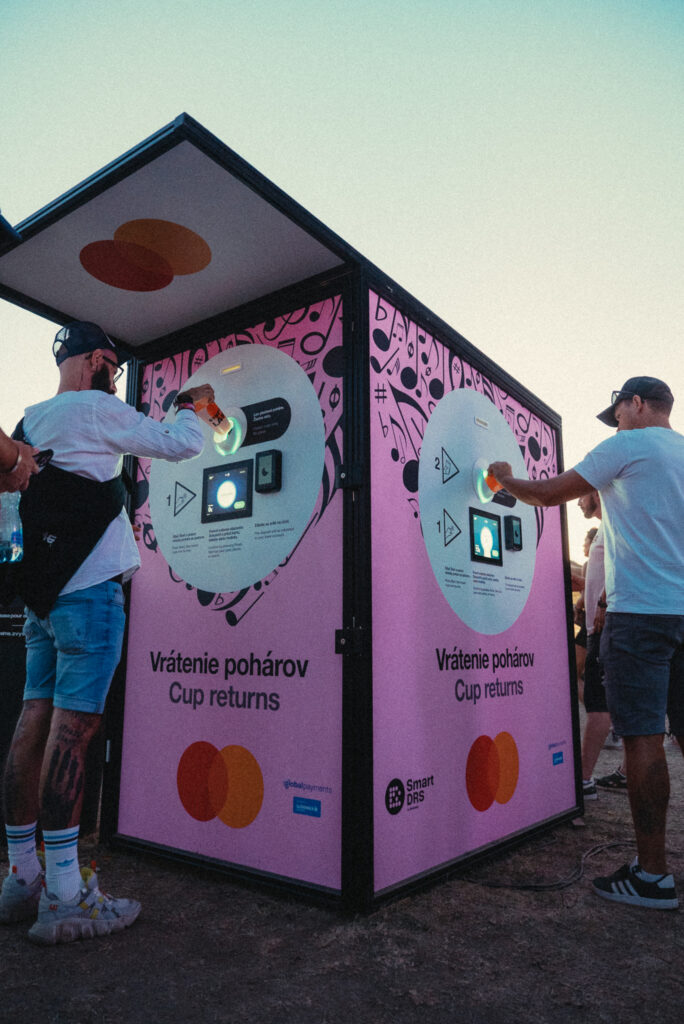
For visitors, the main advantage is that they need no cash, registration or app, and do not have to wait for staff assistance. The return takes only a few seconds, allowing them to continue enjoying the event as soon as the process is confirmed.
Organisers, meanwhile, do not need a staff member to handle every return. The return stations manage most routine transactions automatically, allowing the team to focus on overall operations. The collected data also shows when and where return activity increases.
Where could this integrated solution be used beyond festivals and stadiums?
“There are many more scenarios in which card-based deposit refunds can add value beyond reusable cups at festivals.”
Michal Kitko, Global Payments
The same principle can be applied wherever a customer pays a deposit when receiving an item and needs it refunded upon return. Beyond events, potential applications include food-service businesses, corporate and university campuses, retail environments and broader reusable packaging systems.
What matters most in a solution like this?
“The best solution is one that visitors do not have to think about. They simply return their cups, tap their card and walk away knowing that everything worked exactly as it should.”
Michal Kitko, Global Payments